Economic Inclusion in Chad
Economic Inclusion in Chad
On this page
What is the vision for refugee economic inclusion?
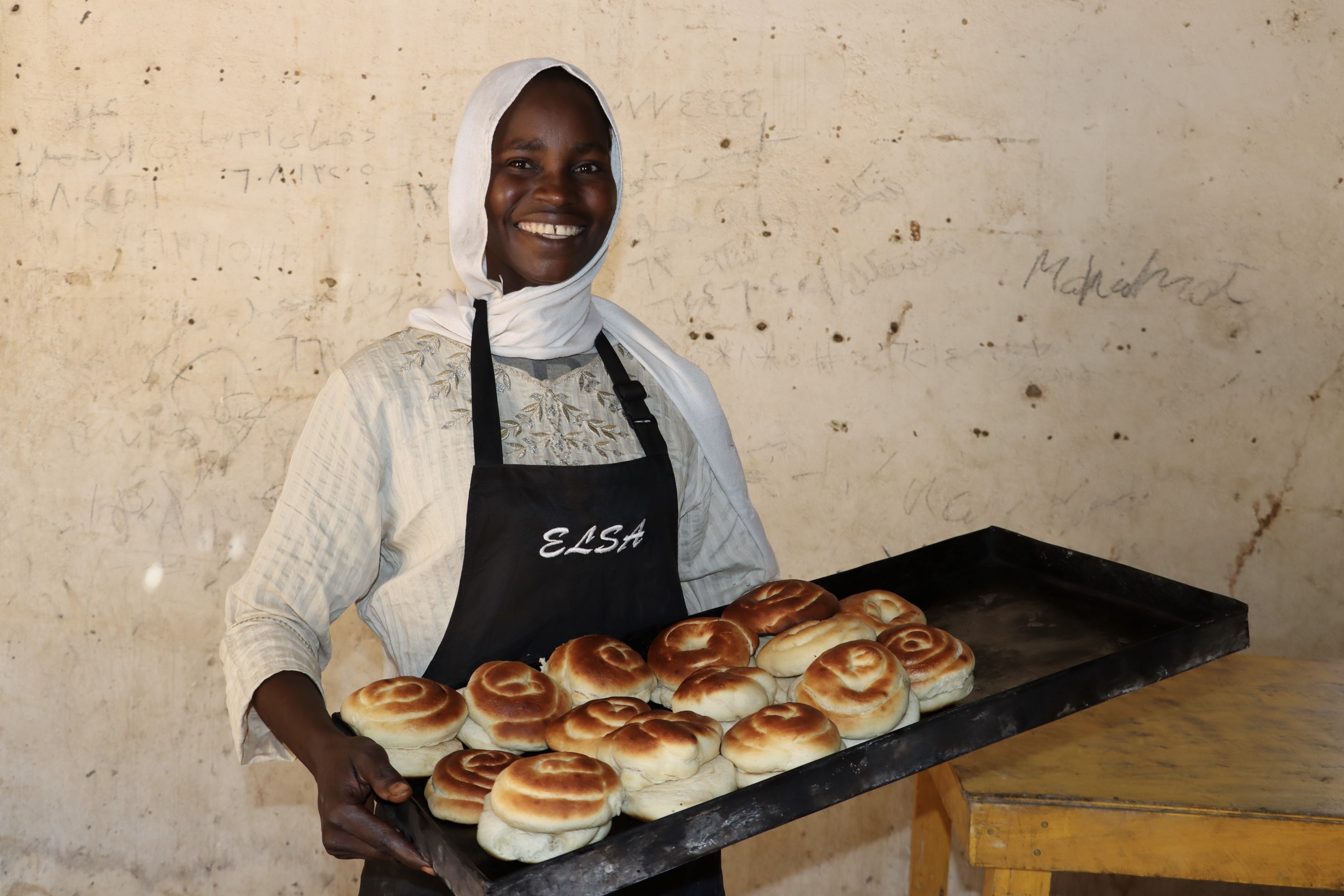
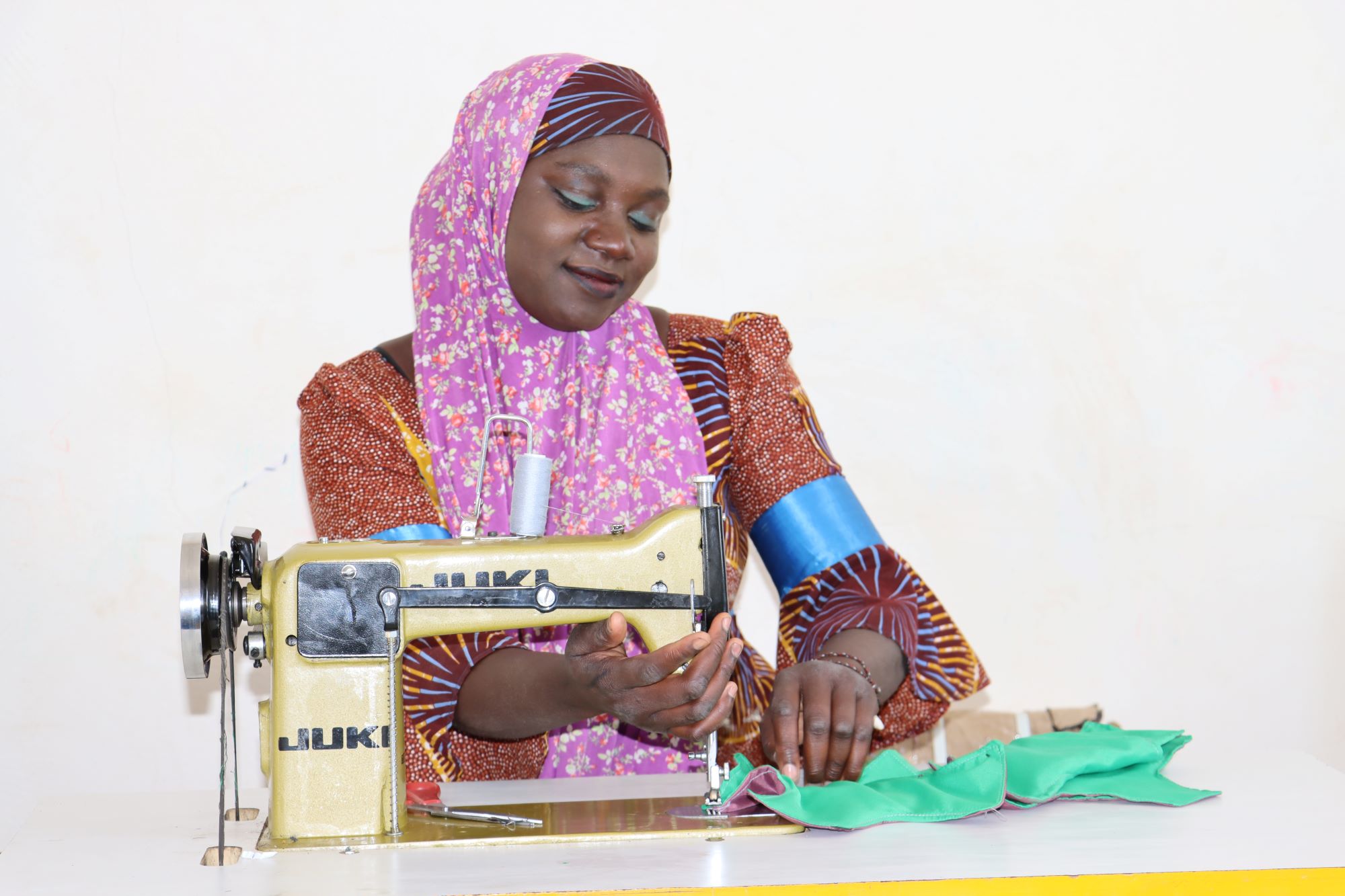
Refugees are recognized as economic actors and, by investing in their productive capacities, Chad can harness their potential to contribute to the country’s development. Humanitarian, development, and peace actors support the socio-economic inclusion of refugees in host areas, through actions aimed at increasing existing assets and capacities of refugee households and host communities, ensuring access to public services and social safety nets, and promoting peaceful coexistence.
If refugees could become as productive as Chadians, the World Bank estimates that poverty among refugees would fall from 88% to 50%, while the income earned by poor refugees would increase to 83% of the poverty line, thus significantly reducing the need for assistance. Moreover, integrating refugees into the economy would generate an additional cost savings. Supporting their basic needs through humanitarian assistance would cost USD 543 million annually, assuming 1.17 million Sudanese refugees in Chad. By integrating newly arrived refugees, the need for subsistence aid would drop to USD 252 million. If all Sudanese refugees were fully integrated economically, the need for assistance could potentially drop to USD 89 million (World Bank 2024).
Policy Environment
Chad’s 2020 Asylum Law - which grants refugees rights to land ownership, formal employment, and free movement - lays the ground for refugees’ economic inclusion.
Article 28 of the 2020 Asylum Law grants refugees the most favourable treatment afforded under similar circumstances to foreign nationals regarding the pursuit of gainful employment, whether salaried, non-salaried and/or self-employed. Article 61 of the 2023 Decree, specifically addressing local integration, guarantees refugees the right to access salaried or non-salaried employment.
Furthermore, the Ministry of Finance lifted the obligation imposed on banking institutions in the 2023 Finance Law to require a National Identification Number for the opening of accounts for refugees registered by the UNHCR. This allows refugees to open bank accounts with proof of registration as refugee.
What is the socio-economic profile of Sudanese refugees in Chad?
The large majority of Sudanese refugees arriving in Chad come from agricultural backgrounds (UNHCR, July 2025). For more information on refugees working in the agriculture sector, see Agriculture & Food Security in Chad (forthcoming).
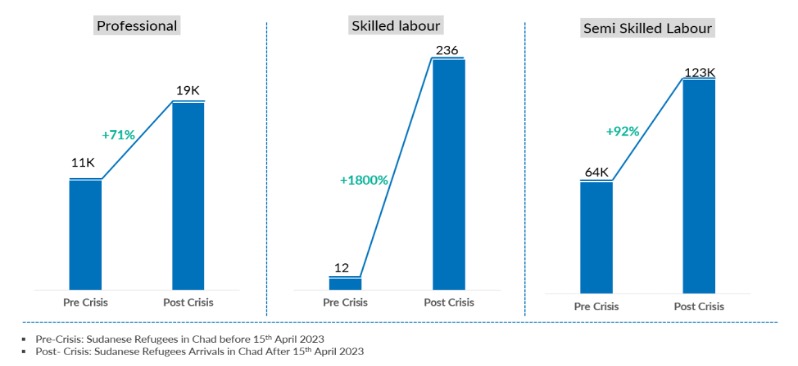
Since April 2023, the number of professional, skilled and semi-skilled refugees has surged, even though their overall percentage among the total Sudanese refugee population in Chad has decreased (UNHCR Registration Data, January 2025). For example, the number of semi-skilled people almost doubled from some 63,000 to 124,000 people. Subtle shifts were also evident between those arriving in 2023 and 2024, with slightly more professional and semi-skilled labourers in 2024. The percentage of students also increased from 5.5% to 11.1% between 2023 and 2024 (UNHCR Registration Data, January 2025).
Figure 1. Evolution of Professional and Semi-Skilled Labour Pre-Crisis and Post-Crisis
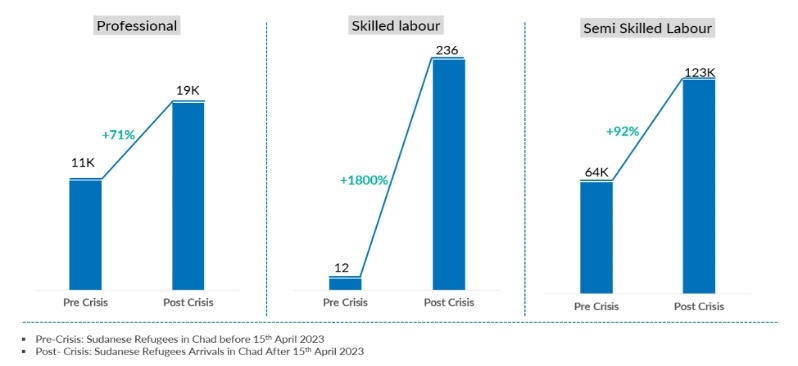
Source: UNHCR Registration Data, January 2025
Among those who were employed in Sudan, 15% were employed in socio-professional categories – and included managers (17%), shopkeepers (7%), teaching professionals (6%), construction professionals (4%), health professionals (3%), cooks (0.2%), and other professionals (62%). For this population, often better qualified than the host community, Eastern Chad offers very few job opportunities (UNHCR Registration Data, January 2025).
Most Sudanese refugees who moved to Chad have little or no education. Compared to those arriving before April 2023, the current Sudanese refugee cohort appears to have lower levels of education, with the share of primary school education dropping from 28 to 16% and no education rising from 43 to 63%. Less than 15% in other group have any secondary schooling (UNHCR Registration Data, January 2025).
UNHCR, WFP, and the UNHCR-WFP Joint Hub are preparing a socio-economic survey of Sudanese refugees in Chad, to establish a more detailed profile of the population.
Data
Data source: Ajala Platform. The Ajala Platform is a humanitarian coordination platform that collects comprehensive data for the response in Eastern Chad.
What investments are required to deliver on the vision?
Using detailed household data, the World Bank identified agriculture and small businesses as promising pathways for refugee self-reliance and recommended complementary programs to improve productivity and access (World Bank 2022).
For agriculture, investments are needed to expand agricultural land and resources, develop vocational training programs, build water management and retention systems, improve infrastructure such as roads and market facilities, and support small-scale industries. For more information, please see Agriculture & Food Security in Chad.
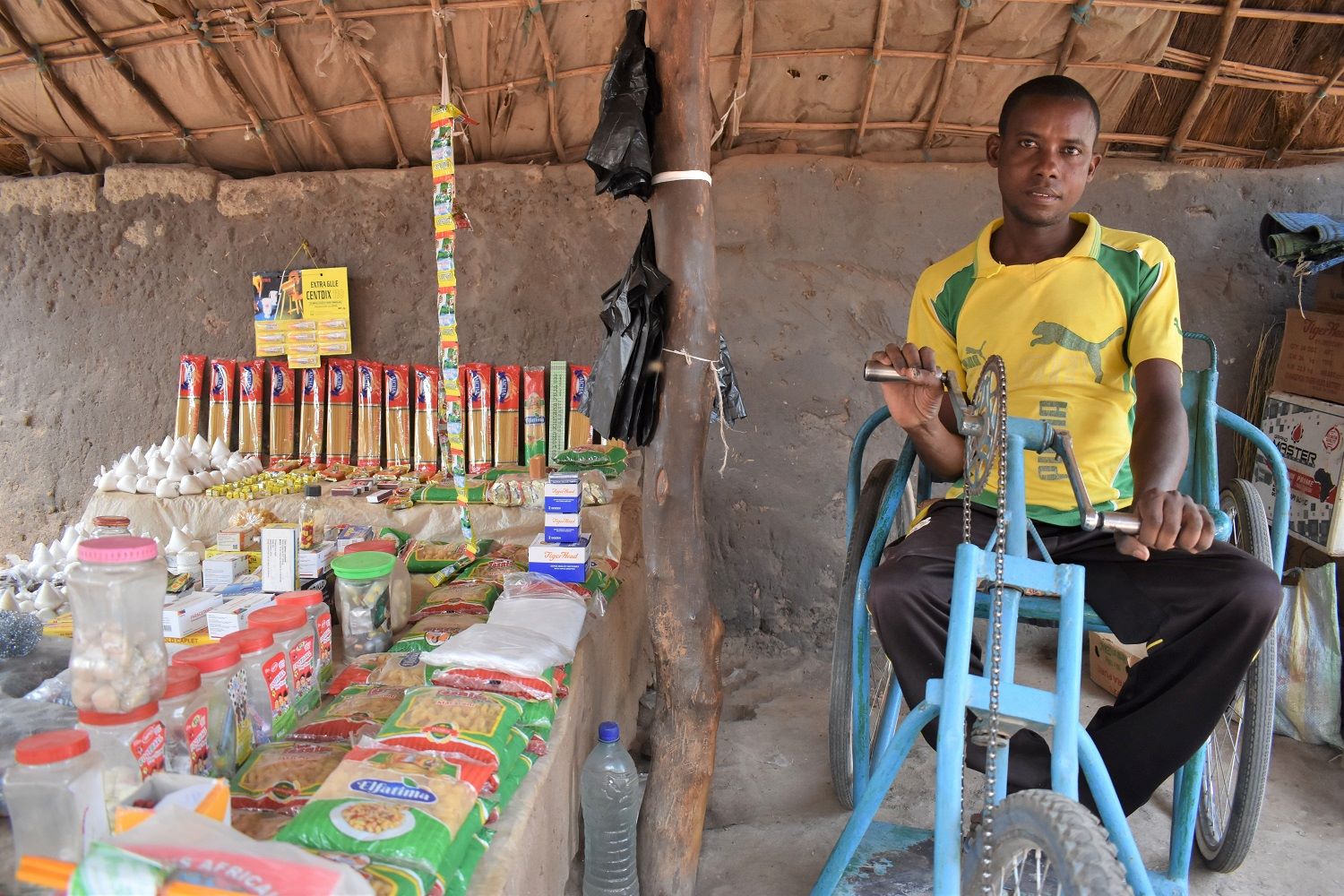
For small businesses, investments are needed to expand financial inclusion, microfinance, and mobile financial services, increase the use of flexible identification methods, and adapt collateral requirements to suit refugees (World Bank 2024).
Financial inclusion in Chad remains very limited, especially in rural areas where services are scarce. As of 2017, just 9% of adults had a bank account and only 4% had access to credit—well below regional averages (IFC 2023). Key obstacles include distance to banks, high costs, lack of documentation, weak network coverage, and low literacy (IFC 2023). In 2023, the Ministry of Finance waived the requirement for a National Identification Number, effectively enabling refugees to open bank accounts with proof of registration as refugee.
The World Bank emphasized the need refugee sites to be located in regions with economic potential, and that refugees should have the freedom to move, at least seasonally, to areas with more opportunities, in accordance with the 2020 Asylum Law (World Bank 2024).
Ongoing Development Interventions
- World Bank, New Operation Chad Adaptive and Productive Safety Nets Project
- World Bank, Chad - Refugees and Host Communities Support Project (PARCA)
- World Bank, Local Development and Climate Change Adaptation Project (ALBIA)
- AFD & European Union, Economic and Social Resilience Program for Populations in the East in the Face of Conflicts and Climate Change in Chad (RESPECCT)
- AFD & European Union, Nex’SUD
- European Union, EU-INTPA Strengthening community resilience through improved livelihoods and access to basic services for vulnerable and displaced communities affected by conflict and climate-change
- European Union, EU-INTPA Regional Support to Chad, Ethiopia and South Sudan in Response to Sudan Crisis
- AfDB & UNDP, Emergency and Support Project for the Stabilisation and Recovery of Refugees and Host Communities in the Lake Chad Basin (PASRRC)
- Mastercard Foundation
- IsDB, Skills Training Education Program (STEP)
- Qatar Fund for Development, Providing lifesaving protection and essential assistance to Sudanese refugees in Chad
Spotlight: Mastercard Foundation and UNHCR are partnering to strengthen education and livelihoods opportunities for more than 500,000 refugees and displaced youth in Chad and across Africa. Activities to promote refugee economic inclusion in Chad include: (1) Training programme with the Chad National Bar Association for 100 refugee legal professionals; (2) Vocational training initiatives aimed at addressing the skills gap in Chad’s humanitarian and development sectors; (3) Identification and registration of over 1,000 refugees with medical backgrounds, and ongoing collaboration with the Order of Physicians of Chad to enable refugee doctors and paramedical staff to practice in the country.
Spotlight: ONAPE (Office National pour la Promotion de l’Emploi) is a government agency in Chad, operating under the Ministry of Public Service and Employment, that coordinates job placement, vocational training, and support programs to promote employment and self-employment across the country. Via a Memorandum of Understanding, ONAPE and UNHCR partnered with the aim to strengthen refugee capacities and facilitate access to public employment services via training, support for self-employment, and professional integration - through programs such as the Self-Employment Program (PAE – Programme d’Auto-Emploi) and the Support Program for Graduates without Experience (PADE – Appui aux Diplômés sans Expérience)."
Key Resources
Contacts
UNHCR: Yves Amoussougbo, Senior Development Officer ([email protected])