Uganda

Uganda
On this page
Uganda's Response to the Sudan Crisis
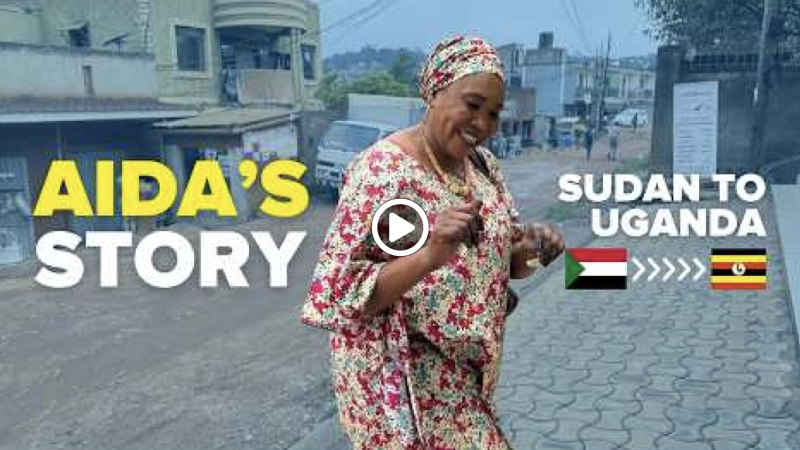
The Sudanese crisis that began in April 2023 has significantly impacted Uganda’s refugee situation. As of August 2026, Uganda hosted over 2 million refugees and asylum seekers. Among them, the number of Sudanese refugees and asylum seekers rose from 16,694 in January 2024 to 96,966 by October 2026.
The majority reside in Kiryandongo Refugee Settlement, which was designated as the primary reception and registration point for Sudanese refugees in November 2023. As of April 2026, 84% of Sudanese refugees live in Kiryandango, 10% in Kampala and the remainder (comprising mostly those who sought asylum in Uganda before 15 April 2023) in other settlements across the country. Refugees who settle in Kiryandongo receive humanitarian assistance such as food, education and health care services and emergency shelter items, while those in Kampala benefit from policy and advocacy support to reduce barriers to accessing jobs and livelihoods as urban refugees are expected to be self-reliant.
Uganda's globally acclaimed refugee framework, underpinned by the 2006 Refugees Act and 2010 Regulations, guarantees refugees essential rights, including freedom of movement, employment, and access to national services. This progressive approach, coupled with the explicit inclusion of refugees in Uganda's National Development Plan (NDPIV) 2025/26 –2029/30 creates an enabling environment for development investments.
Socioeconomic Characteristics of Displacement
According to registration records, the majority of Sudanese refugees in Uganda are women and children (71%), represent several different ethnic groups, came primarily from Khartoum, and reside in Kiryandongo and Kampala. Roughly equal shares of Sudanese refugees in Uganda are female (48.45%) and male (51.5%). Most are Muslim, coming from different ethnic groups, of whom 24% are Zaghawa and 21% Fur. Youth between 12-17 years make up 12.4 % of the Sudanese population. The majority fled from Khartoum (46%), followed by South Darfur (15%) and other states (39%) and settled in Kiryandongo Settlement or Kampala.
Sudanese refugees in Uganda bring skills and occupational backgrounds. Approximately, 24,766 (27%) of Sudanese refugees have studied at the university level. Many continue to act primarily as students, but others have a mix of occupational backgrounds.
Policy & Legal
Uganda's refugee protection system is grounded in the 2006 Refugee Act and 2010 Refugee Regulations. These align with international conventions, emphasize non-refoulement and integration into national systems, and provide a legal framework for the rights of refugees, including documentation and legal protection. The Government of Uganda, through the Office of Prime Minister - Department of Refugees has developed a Refugee Policy. This policy is under cabinet approval.
At the 2023 Global Refugee Forum (GRF), the Government of Uganda served as a co-convenor and made a series of forward-looking pledges to promote the sustainability of its refugee response. These commitments were structured across five thematic areas: Increasing Resilience and Self-Reliance; Addressing Environment, Climate Change and Energy Challenges; Localizing the Refugee Response; Securing Durable Solutions; and Transition Management. View the 2023 GRF Pledges and the 2025 Mid-Term Progress Review.
The overarching goal is to advance the inclusion of refugees into national systems. The arrival of Sudanese refugees has increased pressure on already strained basic services in Kiryandongo and other hosting areas, including in urban Kampala. Financial investments from government and development partners are required through appropriate development financing mechanisms.
Recommended Priority Investments
Health
New arrivals from Sudan, who access national health services on par with nationals, have put additional strain on the already overstretched health care services, which require long-term development investments in support of Uganda’s Government-led Health Sector Integrated Refugee Response Plan (2019-2024) to ensure access to quality health services and support the transition of health facilities in Kiryandongo to full government management.
Water & Sanitation
There has been a reduction in the level of services, which can be attributed to the increased number of new arrivals without a match in infrastructure development. The per capita water consumption rate stands at 17 liters per person per day on average, with some pockets of the settlement - especially where new arrivals are settled - receiving as low as 11 liters per person per day. Infrastructure expansion requires additional investment.
Education
The inclusion of more than 12,000 school-age Sudanese children in the national education system, while ensuring that both refugee and host community children have access to quality education, will require additional development investments in support of the Ministry of Education and Sports (MOES) Second Education Response Plan for Refugees and Host Communities (ERPII).
Economic & Financial Inclusion
There is an opportunity to support the Government’s Global Refugee Forum (GRF) pledge to create 300,000 economic opportunities by 2027 through investments in agricultural value chains and agribusinesses, as well as by facilitating private sector investment and job creation initiatives for refugees and host communities in Uganda, including in Kiryandongo District. A Livelihoods and Employment Needs Assessment (December 2024) provides insights on the labour market contributions and needs of Sudanese refugees living in Kiryandongo and Kampala.
There are also plans to adopt a “hub approach” to promote economic transformation in refugee-hosting districts by improving access to integrated services within close proximity and freeing up more land for large-scale economic activities. The economic hub model will include the establishment of common-user facilities such as one-stop business facilitation centers and business incubation centres, while also improving connectivity through infrastructure development, including roads, access to the national grid, and off-grid energy solutions.
This approach will require additional investments, including socio-economic data analysis and skills profiling to better inform livelihoods interventions. For refugees with professional qualifications, engagement with relevant government authorities and professional bodies is ongoing to support recognition of prior learning and certification, enabling refugee professionals to practice in Uganda.
Continued engagement with government authorities will also be necessary to facilitate refugees’ access to work permits, as well as to strengthen interoperability between the refugee identification system and national systems, including the banking system and the Credit Reference Bureau. These efforts are essential to advancing the financial inclusion of refugees in line with the National Financial Inclusion Strategy 2023-2028.
Land Use & Masterplans
Planning approaches in areas receiving new arrivals will guide systematic plot demarcation and allocation for specific uses, such as shelter, kitchen gardens, farming for subsistence and surplus production, woodlots, protected areas, roads, WASH facilities and other physical infrastructure. Planning efforts are expected to contribute significantly to more efficient and sustainable use of development resources.
Kiryandongo Settlement
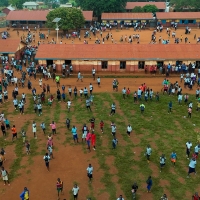
Following the 2023 Sudan conflict, Sudanese refugees (mostly women and children) arrived in Uganda, with 96% of the new arrivals directed to Kiryandongo Settlement. As of April 2026, Kiryadongo Settlement hosts 166,907 refugees and asylum seekers, of which, 74% are women and children, and 29% are youths between 15-24 years. Sudanese refugees constitute 47.5% of the population in the settlement.
In line with Uganda’s integrated service model, refugees share public health centres, schools and water systems with host communities. Protection services include refugee ID documentation, child protection and GBV programs, psychosocial support, and legal aid. Livelihoods rely on land plots and cash transfers, while formal jobs are scarce.
Coordination is led by the Office of the Prime Minister (OPM), working through district authorities and sectors. Best practices involve “area-based” planning with district authorities (e.g. Kiryandongo/Bweyale town) – bolstering health and school capacity for both refugees and hosts, upgrading water and sanitation services, and integrating refugees into local markets. Short-term next steps and priorities include urgently scaling up WASH and health services, expanding schooling spaces, and engaging host communities in all planning. For labor market insights, refer to the Livelihoods and Employment Needs Assessment (December 2024) and Kiryandongo Job Fair Report (December 2024).
Spotlight: Refugee Inclusion into Kiryadongo District Development Plan
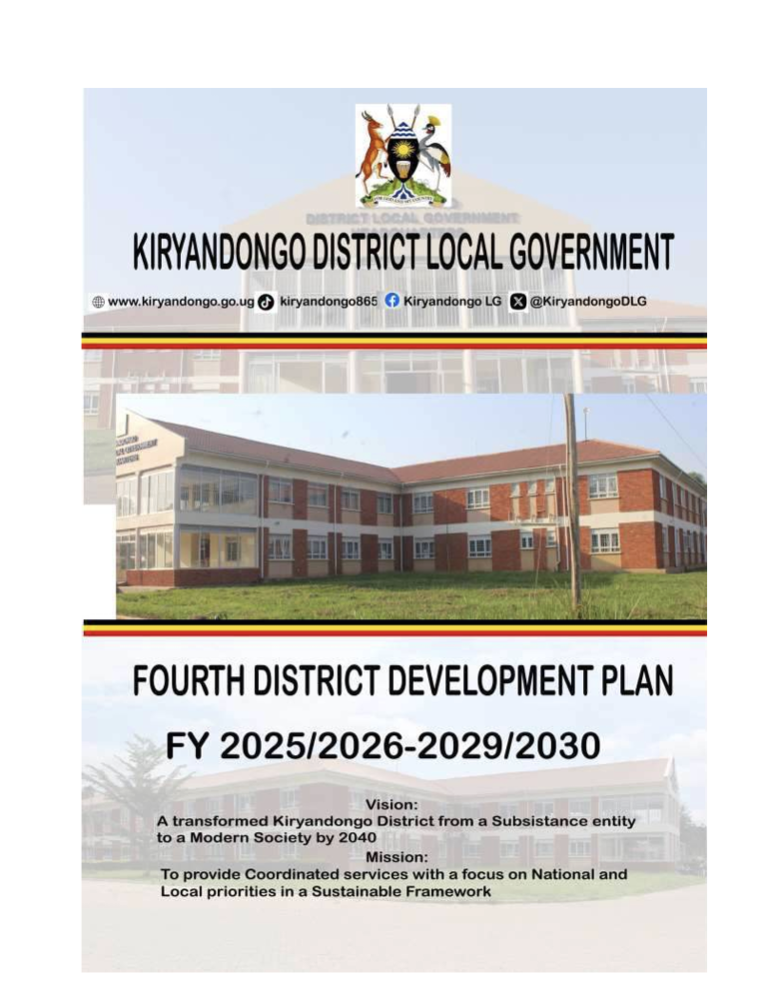
Kiryandongo District has demonstrated strong commitment towards refugee inclusion and integration within its District Development Plan IV (2025/26–2029/30). Refugees are integrated within the district population planning framework, particularly in areas of healthcare, education, livelihoods, water, sanitation, and infrastructure development
The Plan recognizes refugees not only as beneficiaries but also as contributors to local economic growth through agriculture, trade, labour, and market expansion. At the same time, it highlights the need for strengthened infrastructure, employment opportunities, environmental management, and social cohesion interventions to sustainably address the growing demands on district resources while enhancing resilience and peaceful coexistence between refugees and host communities. The district highlights the importance of multi-stakeholder coordination involving government, development partners, civil society, and communities to ensure equitable service delivery and socio-economic transformation for both refugees and host populations.
Urban Areas
Kampala city hosts over 170,474 refugees and asylum seekers (UNHCR 30 April 2026), including over 9,362 Sudanese refugees who arrived in Uganda after the start of the conflict in Sudan in April 2023. Refugees in Kampala access services through municipal systems (KCCA clinics, public schools), in principle. Key actors include OPM (Urban Refugee Desk), a dedicated UNHCR Kampala office (established late 2023), Kampala Capital City Authority (KCCA), and NGOs (e.g. NRC, HIAS) providing legal aid, livelihood training, and some protection outreach. However, Kampala lacks a formal refugee response structure. The OPM has historically discouraged direct urban assistance, so many Sudanese receive little or no food or cash aid.
Best practices for Kampala emphasize area-based, multi-sectoral outreach: working with KCCA to improve neighbourhood services (health clinics and schools) and support small businesses; strengthening community networks. Key implementation steps include mapping refugee hotspots in the city, allocating funding to urban actors, and building local NGO/RLO capacity for urban case management.
Many Sudanese living in Kampala are highly skilled, and 42% of Sudanese household heads have a bachelor’s degree (NRC December 2024). However, many reported challenges accessing or retrieving documents and certifications. Skilled Sudanese refugees have sought to contribute the economy of Uganda, including in key sectors such as education, health, trade, services, and skilled labor, and 64% reported actively pursuing formal employment opportunities, reflecting a strong interest in formal labor markets and entrepreneurship (NRC December 2024).
The Kampala Capital City Strategic Plan (2025/26–2029/30) outlines the Kampala Capital City Authority (KCCA)’s commitment to facilitate refugee inclusion through its city governance, planning, and service delivery systems. The Strategic Plan aims to strengthen KCCA coordination of government and partners refugees’ urban inclusion programmes, with dedicated support from the Conrad N. Hilton Foundation. The Strategic Plan also sets the strategic objective to promote the labor market inclusion of refugees.
Integrated Service Delivery
Uganda’s refugee response integrates multiple sectors (health, education, WASH, livelihoods, protection, shelter, cash, etc.) through government-led and humanitarian and development partnerships, but the recent influx of Sudanese refugees strains resources and coordination.
Integrated service delivery in Uganda means coordinated, multi-sector support for refugees and host communities. To address the issue of increased pressure on service delivery, the Government of Uganda (with UNHCR and partners) has embedded refugee services into District Development Plans – for example, Uganda’s Health Sector Integrated Refugee Response Plan aligns refugee healthcare with national systems. The Comprehensive Refugee Response Framework (CRRF) and National Development Plan IV explicitly include refugees to promote long-term solutions, self-reliance and social cohesion. Key needs remain expanding accessible healthcare, education, WASH, shelter and livelihood support for Sudanese refugees and vulnerable host families, and closing service gaps in overstretched settlements.
Ongoing Socio-Economic Research
Documents Library - Uganda
Contacts
UNHCR: Arifur Rahman, Senior Development Officer ([email protected])
ILO: Evans Lwanga ([email protected])