Egypt
Egypt
On this page
Egypt’s Response to the Sudan Crisis
As the main host country for Sudanese fleeing the conflict, Egypt’s refugee and asylum-seeker numbers have tripled since the onset of the Sudan crisis. As of September 2026, nearly 1,085,000 refugees and asylum-seekers from 62 nationalities were registered with UNHCR in Egypt. The Sudanese refugee population is the largest, at 846,556 individuals (78%) – the majority living primarily in Greater Cairo, Alexandria and Aswan. In addition, the government estimates millions more Sudanese in Egypt, including those living and working in Egypt before the war and others who sought the safety of Egypt after the war but have not opted for international protection.
Egypt continues to grapple with deep-rooted structural issues and economic vulnerabilities, which are further intensified by global disruptions, regional instability, and the impacts of climate change. The conflict in Gaza has further impacted the Egyptian economy and the wider refugee-hosting entire region affecting refugees, vulnerable populations as and host communities in Egypt.
Egypt's enactment of the "Asylum Law for Foreigners No. 164" in December 2024 demonstrates its commitment to protecting and supporting a diverse refugee population, building upon Egypt’s tradition of generosity as a host country. However, the protection environment has faced significant pressures since 2023 due to a sustained and ongoing influx of refugees from Sudan. To support the Egyptian government's capacity to effectively absorb the responsibilities transferred from UNHCR under the new law, enhanced assistance is vital to ensure Sudanese refugees have access to state-based protection, improved health and education services, and opportunities for self-reliance. This strengthening will also contribute to reducing the dangers associated with onward journeys to Libya and eventually towards Europe.
Government policy supports refugee inclusion in national systems, but additional resources are needed to cope with the increased number of service users. Refugees have access to the national health care system but face challenges in obtaining secondary and tertiary care. Women and girls survivors of violence struggle to gain access to medical services, particularly in border areas, and are referred to Cairo for treatment, which adds a financial burden. Recent nutritional assessments and data from the Ministry of Health and Population show limited access to food, with high rates of malnutrition among refugees.
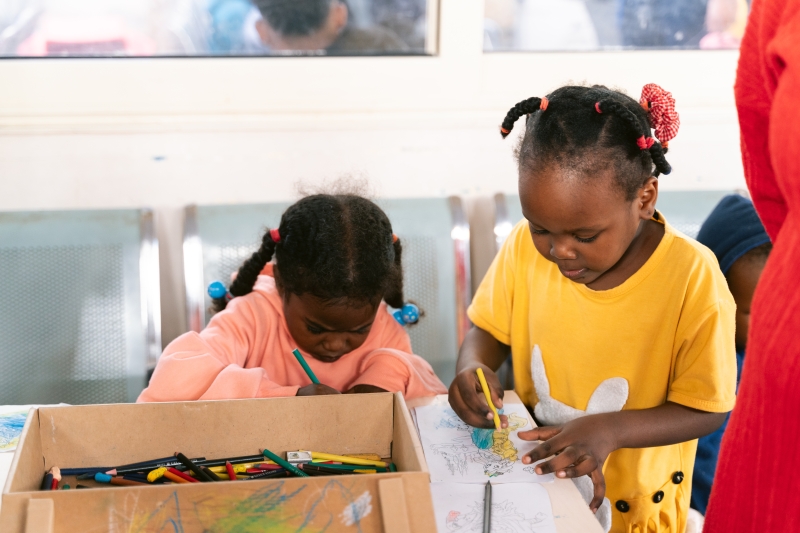
In the education sector, the government is working to simplify and clarify procedures for refugees to access education. Currently, there are over 400,000 school age children registered with UNHCR. Most are at the primary and secondary levels and a recent UNICEF/World Bank assessment showed that 54% of the newly arriving Sudanese children are out of school. Sudanese school-age children and their parents continue to face serious challenges on accessing suitable education opportunities in Egypt, including the closure of several community learning centres in Greater Cairo by local authorities and challenges in obtaining or renewing residency permits on time.
At the Global Refugee Forum Progress Review, in December 2025, the Government of Egypt announced new pledges reflecting Egypt’s continued commitment to shared responsibility and sustainable solutions: extend livelihoods and socio-economic opportunities for refugees and asylum-seekers; the establishment and operationalization of a comprehensive national asylum system aligned with international standards in accordance with the new Egyptian Asylum Law No. 164 of 2024 and to strengthen multi-dimensional response to forced displacement and its implications on security and development.
In Egypt, collaboration with development actors is pivotal to bridge the gap between immediate humanitarian relief and sustainable long-term development. By investing in infrastructure and promoting socioeconomic inclusion, development actors can play a crucial role in enhancing the stability of Egypt, a country situated in a region fraught with protracted conflicts. Within the framework of the Humanitarian-Development-Peace Nexus, development actors can mainstream a community-based approach that emphasizes localized, multi-sectoral interventions tailored to the unique socio-economic, environmental, and infrastructural challenges of specific geographic areas. This approach not only strengthens social cohesion but also fosters sustainable development. Specific joint initiatives may include integrated multi-sector assessments to generate evidence for policymaking, equitable access to basic services, creating pathways to upward social mobility through tailored economic opportunities for youth, capacity development for national and local entities, and enhancing social cohesion through collaborative governance frameworks addressing community-wide threats such as climate change. Furthermore, this collaboration may also extend beyond mere programmatic implementation, encompassing strategic and policy dialogues that serve to fortify Egypt's resilience in the face of regional instability.
Recommended Priority Investments
Health
The recent funding reduction is affecting all areas of UNHCR’s response and has led to major gaps in humanitarian assistance, particularly in a context where refugees have little or no access to social safety nets and work opportunities. The most affected life-saving sectors are healthcare, education and life-saving cash assistance, primarily used by refugees to buy food, pay rent and basic medicine.
According to the latest Health Access and Utilization Survey (HAUS) in 2024, that UNHCR performs annually, 24% of refugee women who delivered during the last 2 years never received any ante-natal care services; 29% of refugees who reported having a chronic disorder did not access care or medications during the 3 months preceding the survey and 24% of refugees who spent money on health care during the month prior to the survey had to accrue debt to afford such expenses.
To ensure sustainable health protection, Egypt is reforming its health insurance system by introducing a national, mandatory Universal Health Insurance System (UHIS). The first phase of implementation is about to be completed, which includes six of Egypt’s 27 governorates (Port Said, Ismailia, Suez, South Sinai, Luxor, and Aswan). The phased roll-out is expected to continue until 2032, after which the entire Egyptian population should be covered and, through it, have access to most of their curative health care needs.
The Universal Health Insurance Law provides an entry point and opportunity for the inclusion of refugees, as it offers a legal framework for their enrolment, while no mechanisms for refugee inclusion have yet been established due to the limited financing. An eventual inclusion of refugees in the UHIS would eliminate the need for a parallel system for health care provision for refugees and guarantee equal access for refugees and nationals to health care. It would provide a target group of about one million refugees with affordable health care services, protecting vulnerable households from out-of-pocket expenditure (OOP) and debt accumulation while addressing legal and institutional barriers.
Education
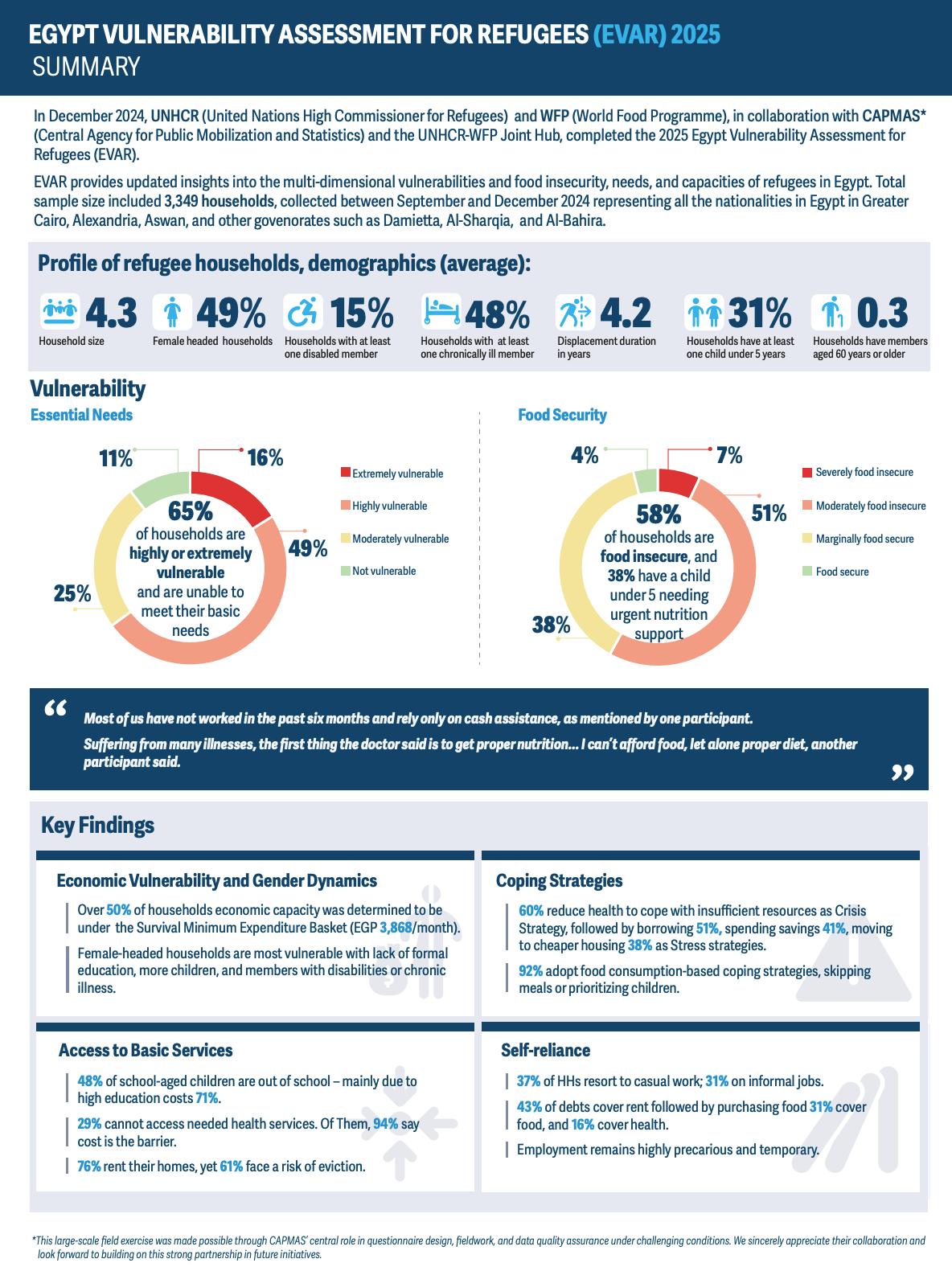
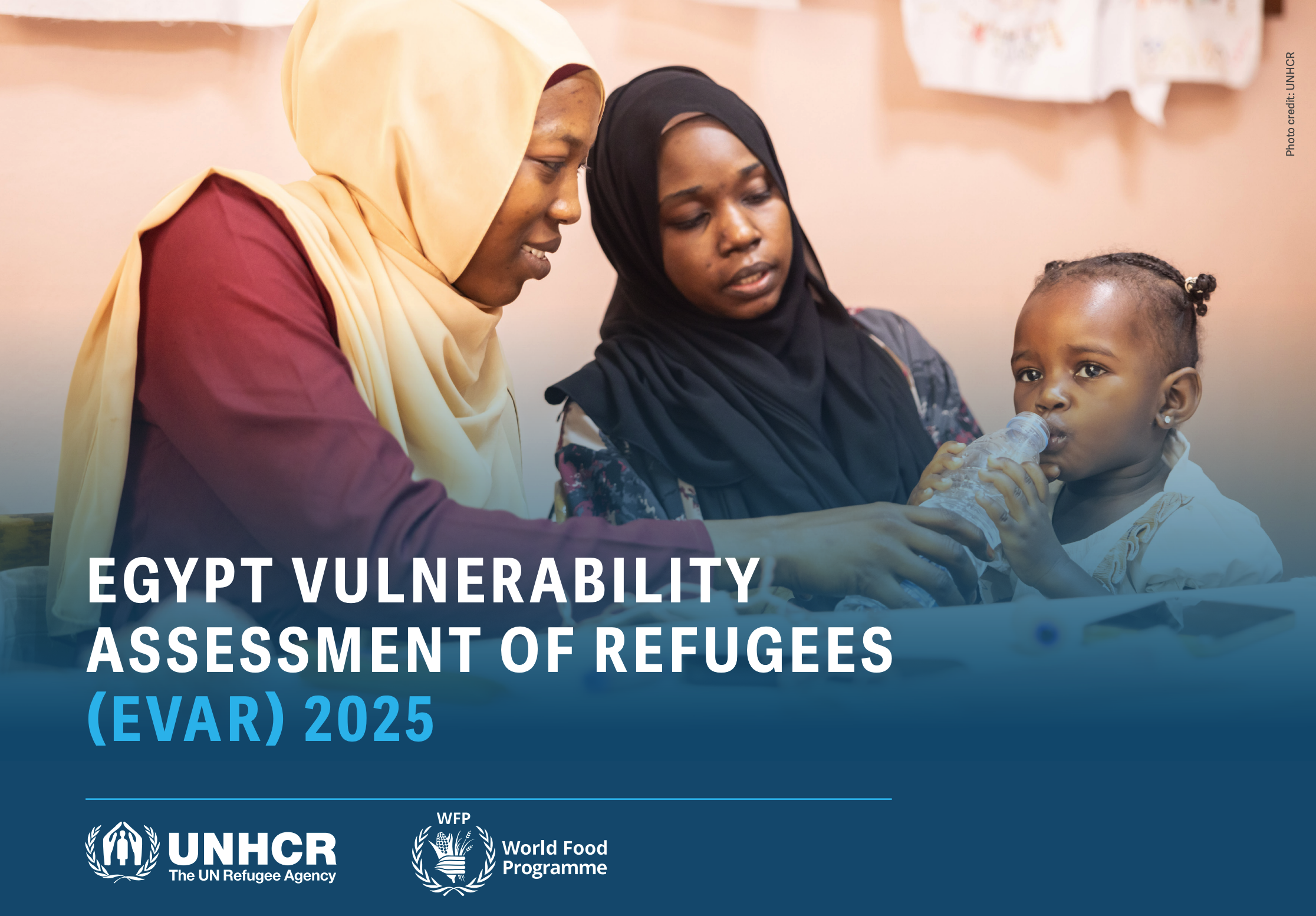
The latest vulnerability assessment (2025) conducted jointly by UNHCR, WFP and the National Statistics Office highlights that over half of the refugees in Egypt experience food insecurity, one in three Sudanese lack access to medical care when needed, and half of refugee children are out of school, largely due to lack of documentation and available resources.
To accommodate the growing number of refugee students, there is a need to strengthen the capacity of schools in Greater Cairo, Alexandria, Damietta, and Aswan through both technical and financial support. Priorities include the construction of new classrooms and the refurbishment of existing facilities. At the same time, administrative barriers to enrolment need to be addressed. Given the challenges refugees faced in obtaining residency permits, requests have been made to accept the residency permit appointment as sufficient documentation for school enrolment. Following the Government of Egypt’s April 2025 decision to extend the validity of asylum-based residence permits from six months to one year—and to expand capacity at immigration offices—UNHCR anticipates a reduction in wait times (from 1,100 + days to under 590 days), which should help ease the enrolment process
Livelihoods and Economic Inclusion
UNHCR had to reduce its monthly cash assistance coverage and transfer value in 2025. This funding reduction will leave around 50,000 highly vulnerable and eligible refugee families (or 164,000 individuals) without the means to pay rent, buy food, or cover essential expenses, accelerating malnutrition, homelessness, and child labour, also exposing women and girls to higher risks of violence and exploitation. The latest vulnerability assessment (2025) conducted jointly by UNHCR, WFP and the National Statistics Office shows that 92% of refugee households resort to “food-consumption” coping, such as families skipping meals, avoiding rent payments, or withdrawing a child from school, which is harmful, survival-oriented behaviour linked to collapsing purchasing power.
Recent funding cuts have impacted vulnerable groups such as persons with disabilities and unaccompanied children most severely. The pressure on informal support networks and host communities will intensify, potentially fueling social tensions and further marginalizing vulnerable refugee households.
In terms of livelihoods, investments should aim to promote the economic inclusion of refugees by supporting self-employment, entrepreneurship, and wage employment, as well as fostering social cohesion activities. Refugees should be provided with information on self-employment opportunities, access to services, and market opportunities. In terms of policy, the main challenge is related to the absence of enabling regulations for refugees and asylum seekers to access formal employment.
Asylum Transition Plan
Prioritization of enhanced assistance to UNHCR and to the Egyptian Government is key in the near future to bolster Government capacity to effectively absorb the responsibilities from UNHCR, as part of the implementation of the new "Asylum Law for Foreigners No. 164".
Inclusion and Data
UNHCR Egypt will prioritize innovative financing mechanisms like social impact bonds and blended finance models (partnering with IFC). These financing strategies will help unlock long-term, sustainable resources. UNHCR will continue its strong engagement with Egyptian authorities for inclusion and will collaborate with local NGOs and community-based organizations. Data gathering, in partnership with the American University Cairo, World Bank, CAPMAS and WFP, with a view to mobilising resources for inclusion of refugees into Government-run Social Protection Mechanisms and the Universal Health Insurance System will be prioritised.
In Egypt, UNHCR will seek synergies through multi-agency, multi-year projects with transformational impact and strong M&E components in furtherance of the SDGs and the UNSDCF (2023-2027). This includes the Dutch-funded PROSPECTS project and the EU-funded Joint UN Program for Migrants and Refugees.
Helping build inclusive policies in the areas of the labour market, social protection systems, and the Universal Health Insurance System will enable skilled refugees to contribute fully to the Egyptian economy and its public systems — thus reducing the costs of refugee hosting in Egypt and allowing them to become net contributors rather than mere recipients. Donors are encouraged to provide international support for these types of policies and initiatives.
Documents Library - Egypt
Contacts
UNHCR: Dr. Elie Abouaoun, Senior Policy Officer ([email protected])
ILO: Amir Obeid ([email protected])
Last updated: October 2026
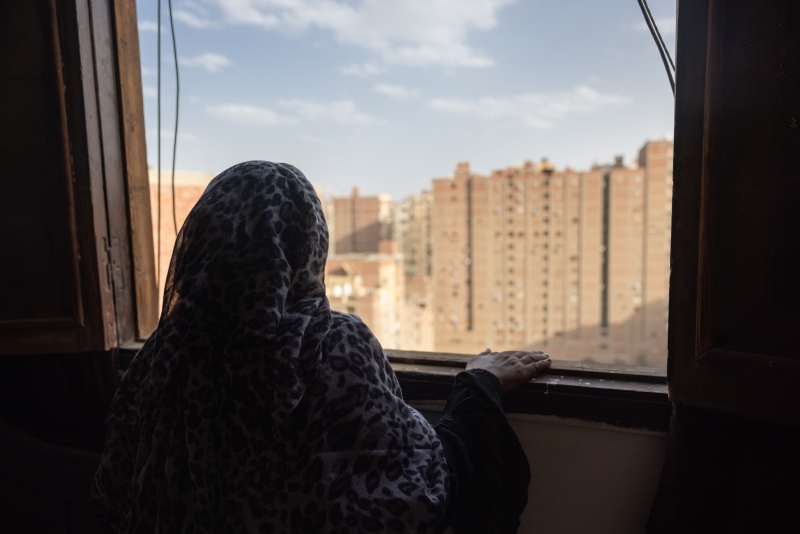
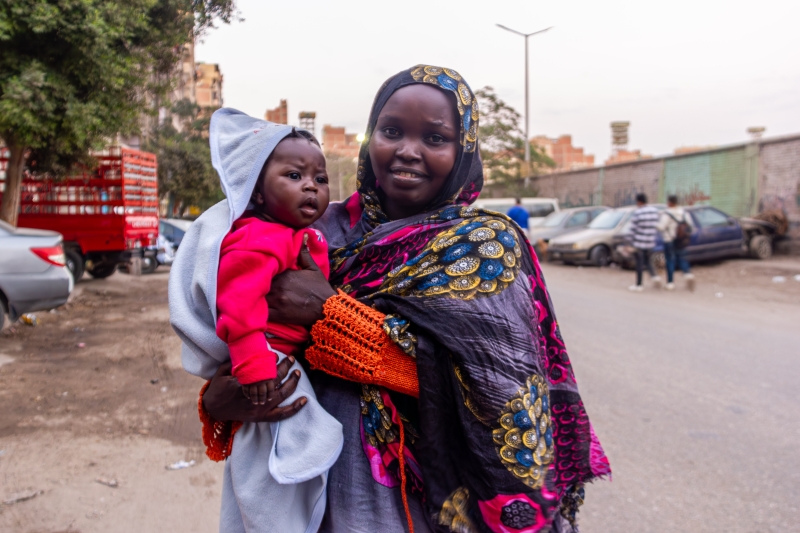
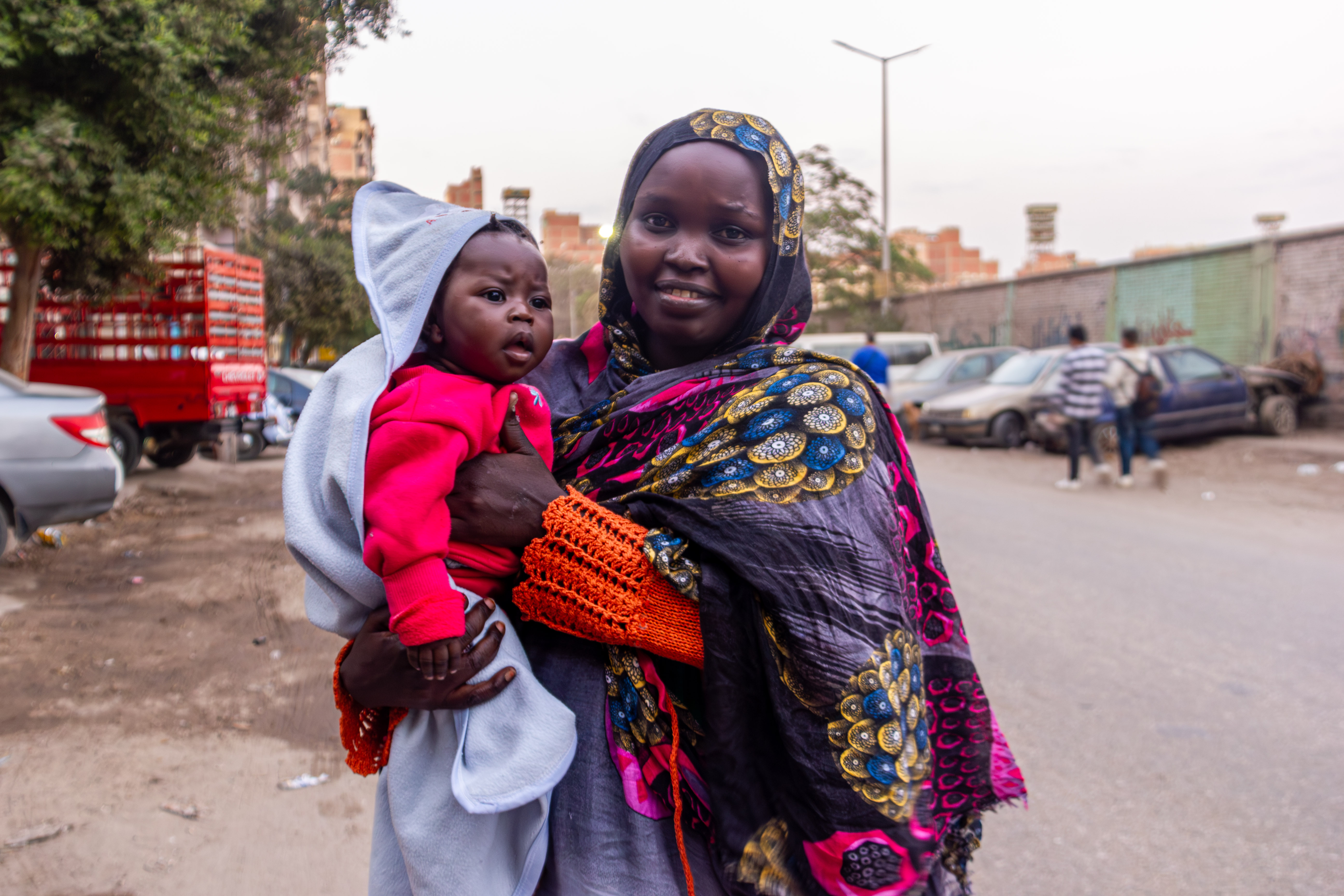
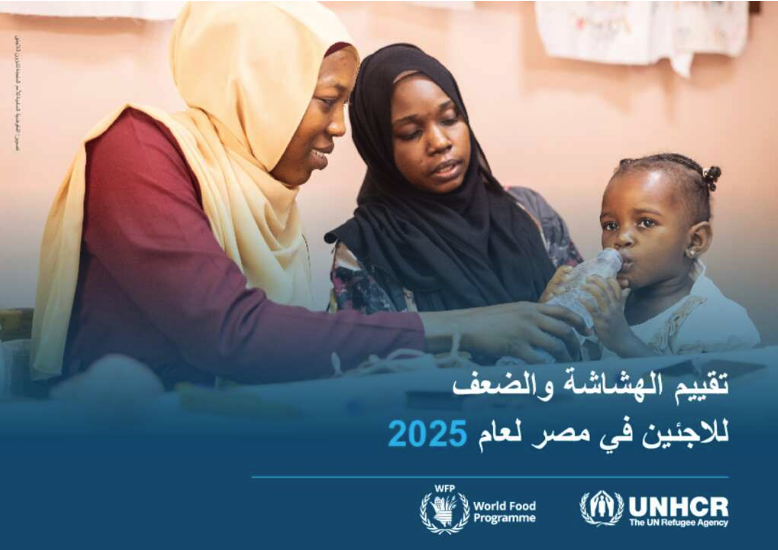
Hanina and her 2 year-old daughter Mariam were part of the group of 30 newly arrived Sudanese refugees and asylum-seekers attending an information session in Cairo in December 2023. Escaping the fighting in Sudan, Hanina and Mariam found safety in Egypt, where they registered with UNHCR. As they embark on crafting a new chapter in Cairo, Hanina hopes for an end to the Sudan conflict soon, yearning to return to her roots and nurture Mariam in the very land that shaped her own upbringing.