
Wadi Fira Province
Wadi Fira Province
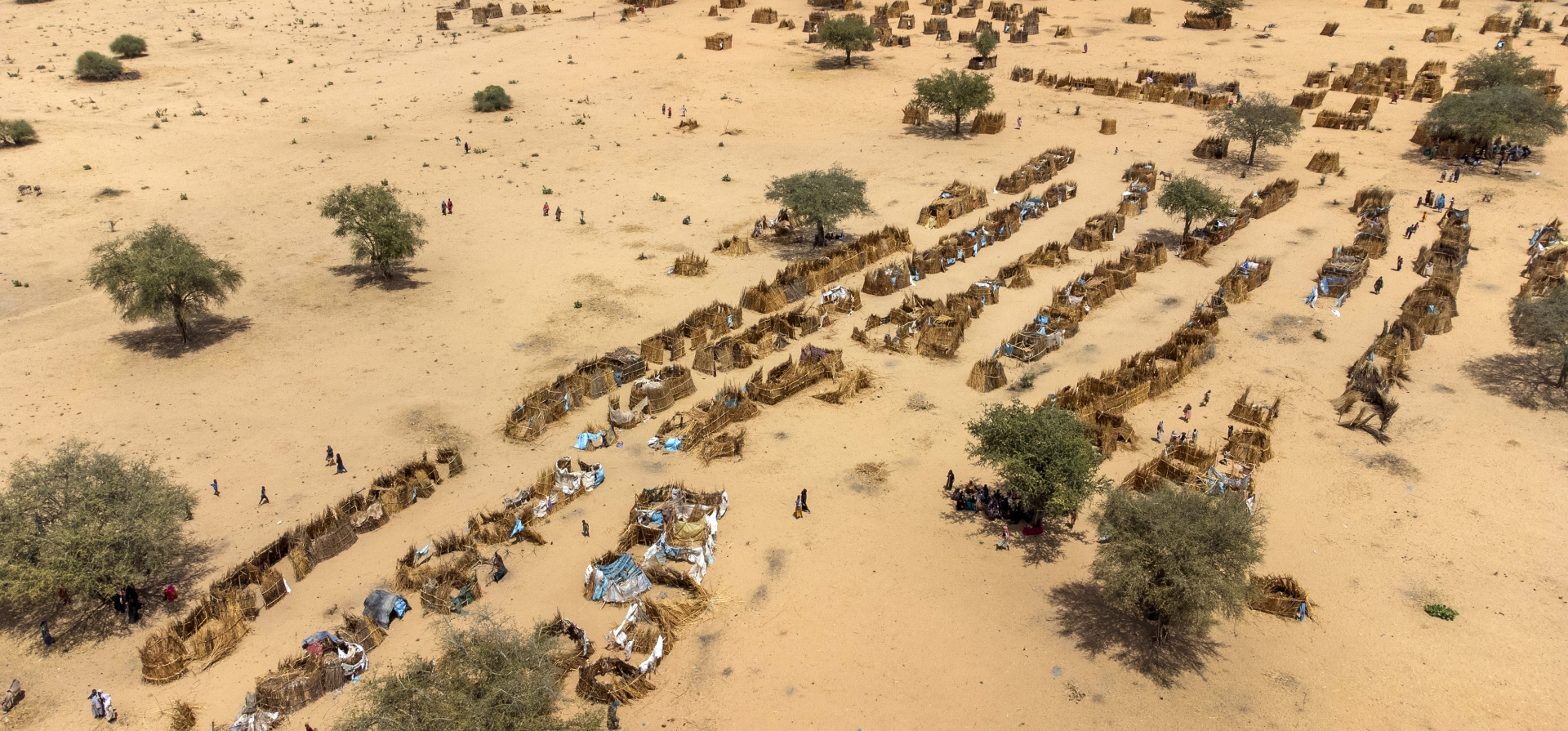
Sudanese refugees gather together, sheltering from the sun under trees and building makeshift shelters, at a temporary site in Koulbous (Chad) on the border with Sudan, after fleeing the ongoing conflict that erupted in Sudan in April 2023.
On this page
Located in Northeastern Chad along the Sudanese border, Wadi Fira Province is home to over 700,000 Chadians and 285,000 refugees across seven departments (Department of Tine, Department of Megri, Department of Dar Al Fawakih, Department of Al Biher, Department of Iriba, Department of Dar Tama, Department of Biltine, July 2025), with Biltine as its capital. The province holds significant agricultural and livestock potential, yet faces major development challenges, including limited water access, inadequate infrastructure, low education and health coverage, and high vulnerability to climate shocks. Its mountainous terrain and harsh climate further complicate access to basic services. Prolonged underinvestment, low literacy rates, and weak local economic structures have driven many young people to migrate in search of opportunities.
Population Data
Data source: Ajala Platform. The Ajala Platform is a humanitarian coordination platform that collects comprehensive data for the response in Eastern Chad.
Map
Provincial Development Priorities
Wadi Fira’s 2024–2028 Provincial Development Plan (PDP) outlines the vision: "By 2028, Wadi Fira is a connected, secure province with a prosperous economy where all people equitably access quality basic services." The 2025 Annual Investment Plan (PAI) for Wadi Fira Province complements the PDP.
The PDP emphasizes a locally driven development approach and an integrated territorial development approach that focuses on the humanitarian-peace-development nexus, aligned with Chad’s Vision 2030 and built around four strategic pillars:
- Peace, governance, and security
- Strengthening production sectors
- Equitable access to basic services
- Climate resilience with gender sensitivity
Sectors
Education
Access to education remains critically low, with a gross enrollment rate of just 54.7% in primary and 8.8% in secondary. Only 18% of school-aged children (6–11) are currently enrolled. Girls face the highest exclusion, with a gender parity index of 0.63.
- 2024-2028 PDP: Construct 742 classrooms, recruit over 1,000 teachers, and supply school furniture and solar-powered tools. Expand secondary and non-formal education with a focus on girls' retention.
- Opportunity: Expand formal and non-formal education access, recruit qualified staff, and invest in infrastructure and equipment. Target support for girls and marginalized children to close equity gaps.
Health
There is only 1 doctor per 56,867 people in Wadi Fira, and 29 health centers are non-functional. Maternal mortality is high, and health personnel are severely understaffed.
- 2024-2028 PDP: Equip 99 health centers and 1 district hospital, train 33 doctors (including surgeons, pediatricians, and anesthetists), and scale up mobile health and community outreach.
- Opportunity: Support PDP efforts to equip health facilities, recruit doctors, improve maternal and childcare, and invest in outreach and transport systems.
WASH
Access to clean water is critically low. Nearly 50% of people rely on unprotected wells, and 74.7% practice open defecation.
- 2024-2028 PDP: Build 240 new water points, improve sanitation with 600 latrines and 60 public bins, and create 6 waste depots across the province.
- Opportunity: Align with PDP plans to construct latrines, build water points, and expand hygiene awareness. Invest in boreholes, retention basins, and community-led sanitation.
Livelihoods and Agriculture
Agriculture and pastoralism are constrained by erratic rainfall, land degradation, and lack of infrastructure.
- 2024-2028 PDP: Develop irrigation systems, train farmers in composting and agroecology, support value chains, irrigation development, seed distribution, rehabilitation of 300 pastoral infrastructure units (water dams, boreholes, animal feed, and veterinary networks). Support for women's cooperatives, youth training, and access to credit.
- Opportunity: Scale up agroecological practices, diversify income opportunities, promote local storage and food security, and expand support to agro-pastoralists.
Community and Social Services
High rates of child labor, early marriage, and gender-based violence affect women and children across the province. Literacy among women is just 0.2%, and only 0.3% of the population is covered by any social safety net.
- 2024-2028 PDP: Construct four social centers, strengthen support to vulnerable groups (women, children, elderly), and expand cash-based safety nets to 2,100 households.
- Opportunity: Support protection services, social safety nets, and inclusion of vulnerable groups through integrated programming in education, social work, and economic empowerment.
Priority Area-Based Investments
- Biltine: Provincial coordination hub, with major education, health, and WASH infrastructure.
- Iriba and Guéréda: Cross-border zones exposed to population movements and weak access to services.
- Amzoer and Al-Biher: Rural areas facing extreme water scarcity, poor school access, and high food insecurity.
Ongoing Development Interventions
- World Bank, Territorial Development and Resilience Project for Chad (ResiTchad)
- World Bank, Chad Agribusiness and Rural Transformation Project (AGRIBUSINESS)
- World Bank, Local Development and Climate Change Adaptation Project (ALBIA)
- World Bank, Chad - Refugees and Host Communities Support Project (PARCA)
- World Bank, New Operation Chad Adaptive and Productive Safety Nets Project
- AFD & European Union, Economic and Social Resilience Program for Populations in the East in the Face of Conflicts and Climate Change in Chad (RESPECCT)
- European Union, EU-INTPA Strengthening community resilience through improved livelihoods and access to basic services for vulnerable and displaced communities affected by conflict and climate-change
- AfDB & UNDP, Emergency and Support Project for the Stabilisation and Recovery of Refugees and Host Communities in the Lake Chad Basin (PASRRC)
- IsDB, Skills Training Education Program (STEP)
- BMZ, Sahel Resilience Partnership Initiative
- Qatar Fund for Development, Providing lifesaving protection and essential assistance to Sudanese refugees in Chad
Key Resources
Contacts
UNHCR: Yves Amoussougbo, Senior Development Officer ([email protected])
UN-Habitat: Camille Imbert, Territorial Planning, Aid & Development Specialist ([email protected])