
Abukadra Integration Site Opens in Renk County: Sustained Investment Key to Solutions for Returnees
Abukadra Integration Site Opens in Renk County: Sustained Investment Key to Solutions for Returnees
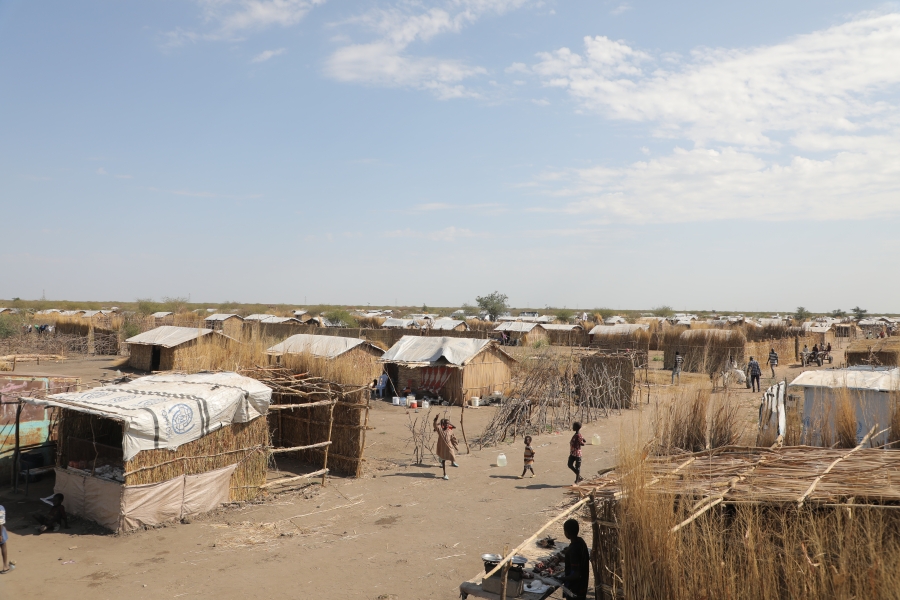
Abukadra Integration Site, South Sudan.
Since the start of the Sudan conflict in April 2023, an estimated 885,657 South Sudanese refugees living in Sudan returned to South Sudan. The vast majority transited to Renk in Upper Nile State, and many continued the journey to other locations within the country.
In June 2025, the County Government of Renk allocated 44 hectares of land in Abukadra to support long-term solutions for returnees. This new settlement is located 5km from the Renk Transit Center and 9km from Renk Town. The Government took this decision drawing from two profiling exercises in 2024 and 2025 at the Renk Transit Center that highlighted the interest of returnees to remain in Renk rather than relocate to other destinations within South Sudan. Returnees opt to stay in Renk primarily due to weakened social networks after years abroad, or fears over security conditions elsewhere in South Sudan.
From July to October 2025, government departments, community leaders, and humanitarian partners jointly assessed, cleared and planned the site in line with settlement standards. Between October and November 2025, 1,008 returnee households (5,376 individuals) relocated to the Abukadra Integration Site, where they live alongside host community members. Discussions are ongoing with the government to approve the second-phase extension of the settlement to include refugees.
Targeted investments are essential to securing the new settlement’s sustainability and developing its economic potential: strengthening service provision and supporting livelihoods are two key priorities.
Services
In addition to infrastructure improvements in schools and hospitals, partners rehabilitated a 2.4 km road connecting the tarmac to Renk Civil Hospital, significantly improving timely referrals for medical cases. Dykes were constructed to protect villages along the river from flooding and seasonal river overflow.
Before the settlement can expand further, investment in WASH and health services is essential. The health sector is constrained by aging or inadequate infrastructure, including weak cold-chain systems. Human resources remain insufficient, with staffing shortages, skills gaps, and unpredictable incentives. Facilities regularly face medical supply shortages and seasonal access constraints. Persistent gaps in WASH services, including unreliable access to clean water and poor waste management, create public health risks that threaten the wellbeing of both returnees and host community members.
Livelihoods
According to the inter-agency Rapid Livelihoods Assessment (January-February 2026), most households depend on casual labor and subsistence agriculture, with widespread income insecurity. Structural barriers include limited access to capital, inadequate skills, weak market linkages, restricted land access, and climate vulnerability. Youth unemployment and gender disparities further deepen vulnerability, while negative coping strategies such as asset sales and reduced food consumption signal deteriorating resilience.
Despite these challenges, many returnees have started small businesses and/or seek opportunities to build their capacity and develop technical skills. There is emerging potential in agro-processing, poultry, livestock, small businesses, and skilled trades. These sectors could drive diversification and sustainable economic recovery, with targeted investment and a phased approach:
- Short-term priorities: immediate livelihood recovery through agricultural input distribution, seasonal support, cash-based interventions, and business start-up grants.
- Medium-term strategies: strengthen vocational and business skills, expand irrigation and climate-resilient farming, and develop livestock and poultry value chains.
- Long-term programming: prioritize a secure land access systems, financial inclusion (including savings associations and microfinance), youth enterprise incubation, and climate-smart agriculture.
For more information, please reach out to Ruth Chepkech Kirui, UNHCR Head of Field Office ([email protected]).