
Ethiopia Launches Groundbreaking "Makatet Roadmap", Ushering in an Era of Refugee Inclusion
Ethiopia Launches Groundbreaking "Makatet Roadmap", Ushering in an Era of Refugee Inclusion
The UN High Commissioner for Refugees highlights refugee inclusion and resilience during Ethiopia visit for World Refugee Day.
Text is cited from the press release Ethiopia Launches Groundbreaking "Makatet Roadmap", Ushering in an Era of Refugee Inclusion (United Nations, 18 June 2026).
18 June 2026. Today, the Government of Ethiopia has officially launched the Makatet Roadmap in Addis Ababa, marking a historic turning point in its approach to refugee protection.
Developed through an intense, nationally driven process involving federal and regional institutions, development partners, UN agencies, civil society and refugee representatives, this comprehensive framework established a unified blueprint for the socio-economic inclusion of refugees while significantly benefiting their gracious host communities. By shifting from temporary humanitarian relief to sustainable, government-led development planning, the roadmap set out to transform existing camp structures into cohesive, self-sustaining human settlements integrated with national service delivery systems.
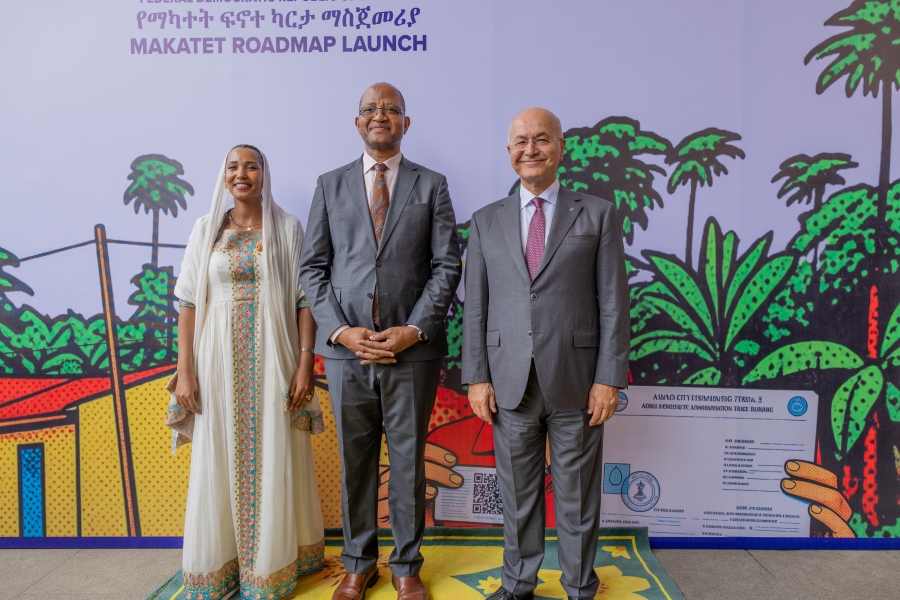
The high-level gathering at the Adwa Museum served as a national platform to present the finalized multisectoral framework and secure collective investment for its operational phase. The framework has officially been launched by Ethiopia's Honorable Speaker of the HPRs Ato Tagesse Chaffo and the UN High Commissioner for Refugees, culminating in a cultural performance refugee youth group.
The Director General of Refugees and Returnees Service (RRS) Madam Teyiba Hassen welcomed dignitaries at the ceremony by highlighting the operational shift towards inclusion, noting that the roadmap bridges the gap between the refugee operation and humanitarian landscapes.
"Today, we moved beyond encampment toward comprehensive town masterplans and integrated, shared services," the DG stated. "The Makatet Roadmap stands as our decisive answer to decades of fragmented assistance, as it’s a model where refugees and host communities grow together under a unified, well-coordinated, government-led system."
Ethiopia’s Minister of Finance Mr. Ahmed Shide mentioned the macroeconomic and structural significance of anchoring this framework within domestic delivery systems to maximize resource efficiency.
"Sustainable economic resilience cannot be built in isolation," the Minister said. "With the launch of the Makatet Roadmap, the Government of Ethiopia transitioned from short-term humanitarian management to an inclusive development model that treats refugees as active contributors to our national growth. "
The UN Resident Coordinator to Ethiopia Mr. Ozonia Ojielo underscored the international community's shared commitment to the framework, celebrating it as a triumph of cooperative planning.
"The UN family stands firmly behind this nationally driven vision," noted the Resident Coordinator. "The Makatet Roadmap is a testament to what can be achieved when government institutions, civil society and international partners unite around a shared goal."
A message delivered on behalf of the Chairperson of the African Union Commission Mahmoud Ali Youssouf lauded Ethiopia's progressive and commendable leadership on a continental stage.
"Ethiopia’s visionary approach aligns perfectly with our collective continental aspirations for inclusion, dignity and stability under Agenda 2063," stated the message. "By creating structural pathways for the social and economic inclusion of displaced populations, this roadmap serves as an inspiring example for the entire African Union, proving that displacement challenges can be transformed into opportunities for regional development and shared prosperity."
The High Commissioner for Refugees Mr. Barham Salih welcomed the shift, highlighting the initiative as a global standard for localized development and international responsibility sharing.
“Ethiopia has set an important example by demonstrating that refugee protection and national development can—and should—advance hand in hand,” said the High Commissioner. “The Makatet Roadmap serves as a blueprint for translating that vision into practical action, creating greater opportunities for refugees and host communities alike. It is closely aligned with our 50 by 35 vision to reduce aid dependency by expanding opportunities for refugees living in protracted situations to become more self-reliant and access lasting solutions over the next ten years. UNHCR remains committed to standing alongside Ethiopia to mobilize international solidarity and the resources needed to turn these aspirations into reality.”
The milestone event culminated with an address by Ethiopia's Honorable Speaker of the House of People’s Representatives Ato Tagesse Chaffo, Federal Democratic Republic of Ethiopia reaffirming his government's highest political commitment to executing area-based inclusion across all refugee-hosting regions.
"The Makatet Roadmap is not merely a policy document; it's a binding strategy for inclusion and development," declared Ato Tagesse Chaffo. "The Government of Ethiopia is fully committed to leading this transition. Through area-based planning and robust coordination, we will ensure that our national systems are strong enough to provide protection, opportunity and a better future for both refugees and the generous communities that host them."
The Makatet Roadmap has successfully been launched, marking a major milestone in Ethiopia’s efforts to embrace refugees in its national systems. The initiative mixes policies, legal frameworks and area-based plans into a coordinated strategy to foster inclusion, resilience and shared growth in spite of resource constraints.
For more information, please contact RRS: Sileshi Demisew ([email protected]); UNHCR: Sona Dadi ([email protected]).