
Agriculture and Food Security in Chad
Agriculture and Food Security in Chad
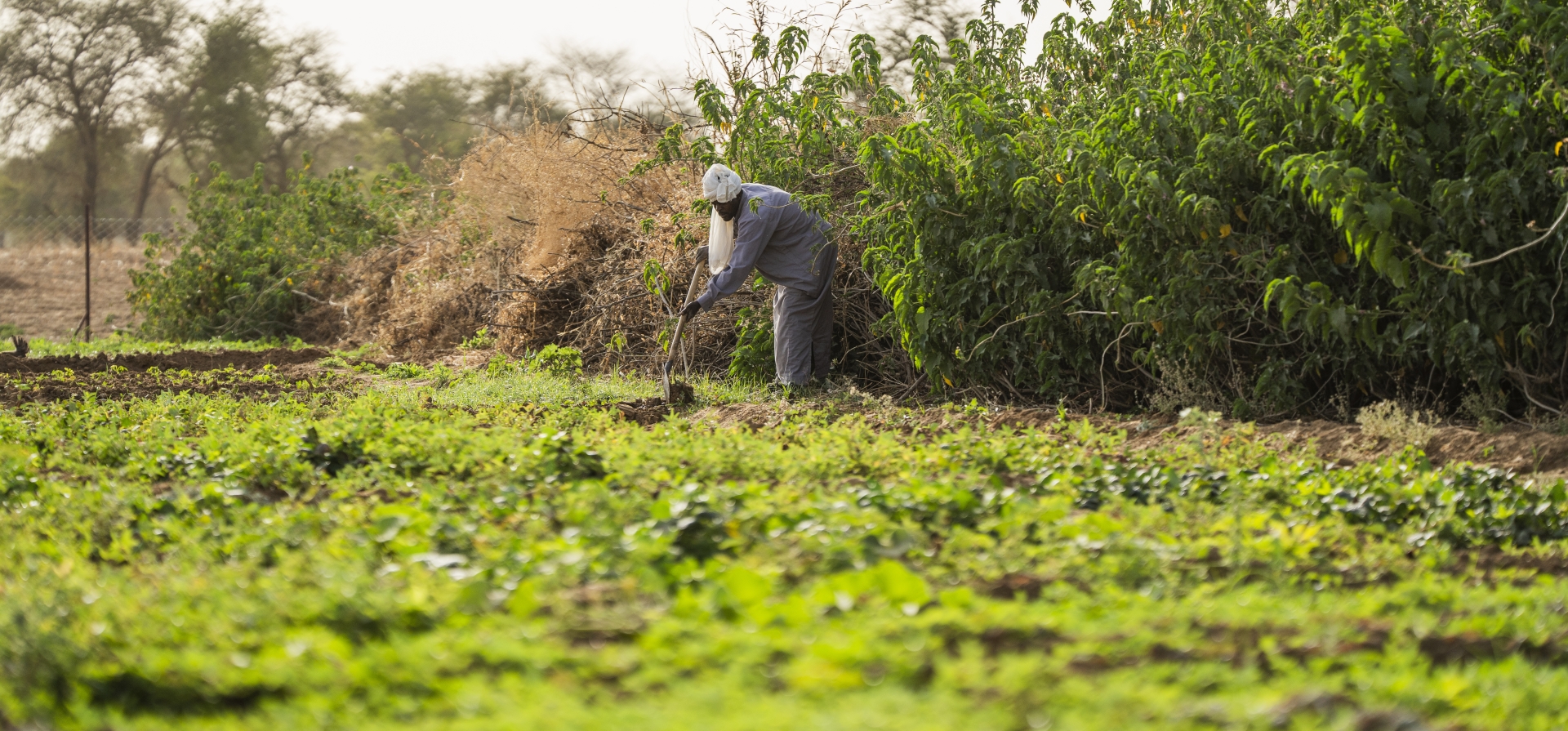
Refugees and host community members work together at the Agro project in Farchana, Eastern Chad, where a newly constructed dam is helping with farming in the area, as underground water levels stay high throughout summer.
On this page
What are the key challenges to food security in Eastern Chad?
The influx from the war in Sudan is intensifying the risk of food insecurity, which already impacts 2.4 million individuals in Chad. The World Bank estimates that 80% of the 1.1 million refugees and asylum seekers in Chad are poor, increasing the total number of poor in the country at 9.3 million people as of 2023 (8.4 million Chadians and 0.9 million refugees) (World Bank 2024). The suspension of trade with Sudan has led to a sharp increase in food and commodities prices in Eastern Chad. Moreover, the arrival of refugees has increased local market demand. Inflation was accentuated during the first months following the crisis, although pressures have since eased to an average inflation of 4.1% and food inflation at 4.8% in 2023 (World Bank 2024).
A national monitoring survey conducted by FAO indicated a 72.6% prevalence of moderate to severe food insecurity, and 10.8% prevalence of severe food insecurity as of July 2025. Food security assessments in Eastern Chad indicate greater vulnerability in Ouaddaï and Sila provinces, compared to Wadi Fira. These areas experience flooding more often, and market access is generally restricted beyond the main towns of Abéché and Goz Beida (FAO, 2025). Moreover, heavy dependence on rain-fed farming makes households highly vulnerable to food insecurity. Recurrent droughts and uneven rainfall distribution reduce cereal yields, especially for millet and sorghum.
Q&A on Agriculture in Eastern Chad
What are the key agricultural value chains?
In rural Chad, most household income comes from farming and livestock. Agriculture contributes about 65% of total earnings, with crop production making up 58.4% and livestock 6.7% (World Bank, 2021). Limited productivity, an emphasis on subsistence rather than commercialization, and a lack of diversification in production constrain income gains (World Bank, 2021). In Chad, more than 80% of cereal harvests are consumed directly by the producing families (World Bank, 2021).
The Saharan desert zone covers nearly 47% of the country's total land area and accounts for 2% of the population (Ennedi Est, Wadi Fira Provinces). The Saharan zone has limited agricultural potential, but has good production rates for date palm. The Sahelian zone covers approximately 28% of the total land area and 51% of the population (Wadi Fira, Ouaddaï, Sila Provinces). The Sahelian economy is agro-pastoral and based on the cultivation of cereals (millet) and oilseeds (peanut and sesame). Vegetable production focuses on onion, garlic, okra, and tomato.
Key resources: DIEM Platform for Chad (FAO), Chad Poverty Assessment (World Bank 2021), Creating Markets in Chad: Country Private Sector Diagnostic, (IFC, 2023), Agriculture Value Chain Analysis (World Bank 2022), Sesame Value Chain Analysis (UNIDO, 2021)
What are the key livestock trends?
The provinces of Wadi Fira, Ouaddaï, and Sila are among the regions with the highest livestock populations in Chad, hosting around 13 million head of livestock according to estimates based on the 2015 General Livestock Census (RGE). These provinces are home to large agro-pastoral communities, and their substantial livestock herds include cattle, sheep, goats, and camels.
Eastern Chad also serves as a principal zone for transhumance pastoralism. Hundreds of thousands of livestock cross the three provinces twice a year, relying for weeks and months on the area's natural resources. Transhumance corridors have been established to facilitate livestock movement through cultivated areas or to provide access to water. However, herd movements along these corridors can impact farmers' crops. In recent years, conflicts between farmers and herders along these transhumance routes have become increasingly frequent. Over the years, a significant number of conflicts related to the narrowing of transhumance corridors, competition for water resources, crop destruction, competition for grazing areas, and livestock killings have been reported.
What are the challenges faced by refugees and the host community?
Land ownership: In 2021 and prior to the 2023 conflict in Sudan, the World Bank noted that asset ownership by refugees in Chad was low: only 4% of Sudanese refugees owned at least one plot of land, compared to 90% of members of host communities. While 60% of host households owned an average of 12 cattle, just 24% of Sudanese refugee households owned 3 cattle on average (World Bank 2021). Following the conflict outbreak in Sudan, the Government of Chad via the 2023 Decree granted the right of land ownership to refugees, although access in practice remains difficult. Eastern Chad offers unused arable lands with the potential for restoring livelihoods for refugees, and the Government of Chad has pledged 30,000 hectares of land in refugee-hosting zones to be made available for refugees. However, the most fertile lands are already subject to significant competition, leaving the less productive areas available. For returnees to Eastern Chad, difficulties accessing land included restrictions imposed by host communities, land occupation, land scarcity and land cost (FAO, 2025).
Gender: Gender analysis of Chad’s agricultural policies highlights progress, as well as areas for improvement in promoting women’s empowerment. Access to resources, including land, varies according to socio-cultural norms, marital status, economic capacity, and ecological context, often leaving vulnerable women at a disadvantage. See Gender Profile for the Agriculture and Rural Development Sectors (FAO, 2021).
Inputs and sale: Other difficulties include constrained access to crop inputs and marketing challenges. As of July 2025, 85% of crop producers in Chad faced difficulties in crop production and 50% in selling crops (FAO; July 2025). Additionally, the lack of storage and processing facilities leads to high post-harvest losses, reducing profitability.
What is the access level to agricultural inputs, such as seeds and fertilizers?
In the last 3 months as of July 2025, 26% of crop producers in Chad reported difficulties in accessing enough seeds, and 37% could not access good quality seeds (FAO, 2025).
Food and Agriculture Data
The Food and Agriculture Organization of the United Nations (FAO) established the publicly available Data in Emergencies (DIEM) Information System in June 2020. Through the DIEM-Monitoring Pillar, FAO collects, analyses and disseminates data to inform decision-making by providing updated information on how different shocks affect the livelihoods and food security of agricultural populations. View the latest indicators for Chad and for more information, visit DIEM Monitoring.
The Haguina Approach
In support of the Chadian Government, UN agencies (FAO, IOM, UNHCR, WFP) and partners are joining forces to empower refugees and host communities to become self-reliant. The Haguina Approach provides a framework to consolidate the activities carried out by UN actors and partners, and to improve coordination to advance the HDP Nexus objectives, in line with those of the Chadian Government. Haguina targets four priority areas: (1) management of natural resources and climate change adaptation, (2) infrastructure, (3) economic development and financial inclusion, and (4) social cohesion and community governance.
Following the 2023 Decree granting refugees land access, the Government allocated 17,500 hectares for land rehabilitation programmes benefiting refugees and host communities. As of May 2024, approximately 68% of the allocated land has been assessed. 10,445 hectares are undergoing rehabilitation and funding has been secured to rehabilitate a further 7,300 hectares, estimated to benefit over 500,000 beneficiaries. Overall, the Haguina Approach aims to rehabilitate 100,000 hectares across nine provinces in Eastern and Southern Chad, and that 1 million participants achieve self-reliance by 2029. View the Haguina Story-Map.
Recommendations and Priority Investments
- Expand construction of water retention structures (seuils d’épandage) in more locations, as well as flood-control structures, irrigation systems, and boreholes, to stabilize water supply and enable multi-season crop and livestock;
- Expand land rehabilitation programmes;
- Expand access to quality seeds and agricultural inputs;
- Promote inclusive land allocation and facilitate access to rehabilitated land for productive agriculture and agroforestry;
- Improve market and transport infrastructure: upgrade rural roads, market hubs, storage and processing facilities to reduce post-harvest losses and strengthen value chains;
- Enhance women’s access to land, inputs, training, and financial services;
- Strengthen local capacities – including cooperatives, farmer associations, refugee organizations – to ensure sustainability of agricultural investments;
- Consolidate HDP nexus activities, build local authority capacity, and ensure multi-stakeholder funding for sustainable impact.
Ongoing Development Projects
World Bank, Local Development and Climate Change Adaptation Project (ALBIA)
Partner: World Bank | Budget: USD 50 M
Sectors: Livelihoods; Natural Resource Management; Disaster Response
Location: Batha; Borkou; Ennedi-Ouest; Wadi Fira; Barh Elgazel | Duration: 2020 - 2025
World Bank and IFC, Chad Agribusiness and Rural Transformation Project (AGRIBUSINESS)
Partner: World Bank and IFC | Budget: USD 150 M
Sectors: Agriculture
Location: Logone Oriental; Logone Occidental; Wadi Fira; Ouaddaï; Sila; Borkou; N'Djamena; Lac; Chari Baguirmi; Hadjer Lamis Fira
Duration: 2024-2030
Implementing entities: WFP and UNHCR for the WHR; Ministry for Agricultural Production and Transformation for the overall project
FAO, Improvement of food and nutrition security, and empowerment of women within communities affected by the Sudanese crisis in Wadi Fira Province.
Partner: FAO
Sectors: Agriculture; Gender
Location: Wadi Fira
EU-INTPA, Regional Support to Chad, Ethiopia and South Sudan in Response to Sudan Crisis
Partner: European Union | Budget: EUR 3 M
Sectors: Livelihoods; Resilience; Agriculture
Location: Ouaddaï | Duration: 2023 - 2025
Implementing entities: UNHCR and WFP
EU-INTPA, Strengthening community resilience through improved livelihoods and access to basic services for vulnerable and displaced communities affected by conflict and climate-change
Partner: European Union | Budget: EUR 11 M
Sectors: Access to Services; Environment; Livelihoods; Agriculture
Location: Ouaddaï; Wadi Fira; Sila | Duration: 2025-2027
Implementing entities: UNHCR
EU - AFD | Economic and Social Resilience Program for Populations in the East in the Face of Conflicts and Climate Change in Chad (RESPECCT)
Partner: EU - AFD | Budget: EUR 26 M
Sectors: Social Protection, Resilience & Jobs
Location: East, South, West | Duration: 2023-2026
Implementing entities: Concern Worldwide (CW) (lead), International Rescue Committee (IRC)
Spotlight: Seuils d’épandage in Ouaddaï Province
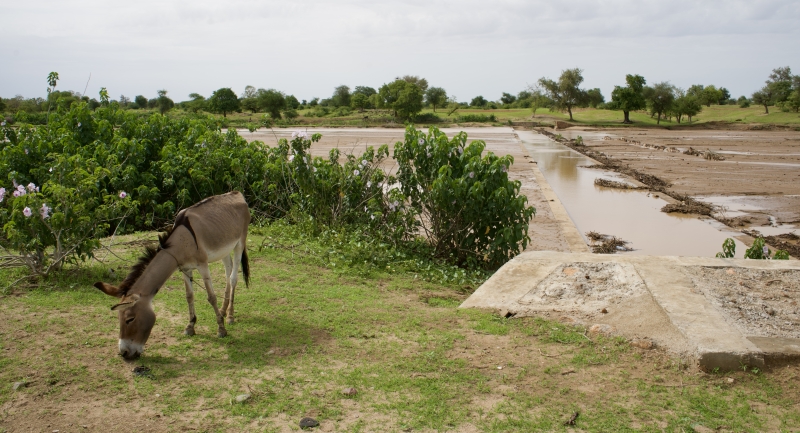
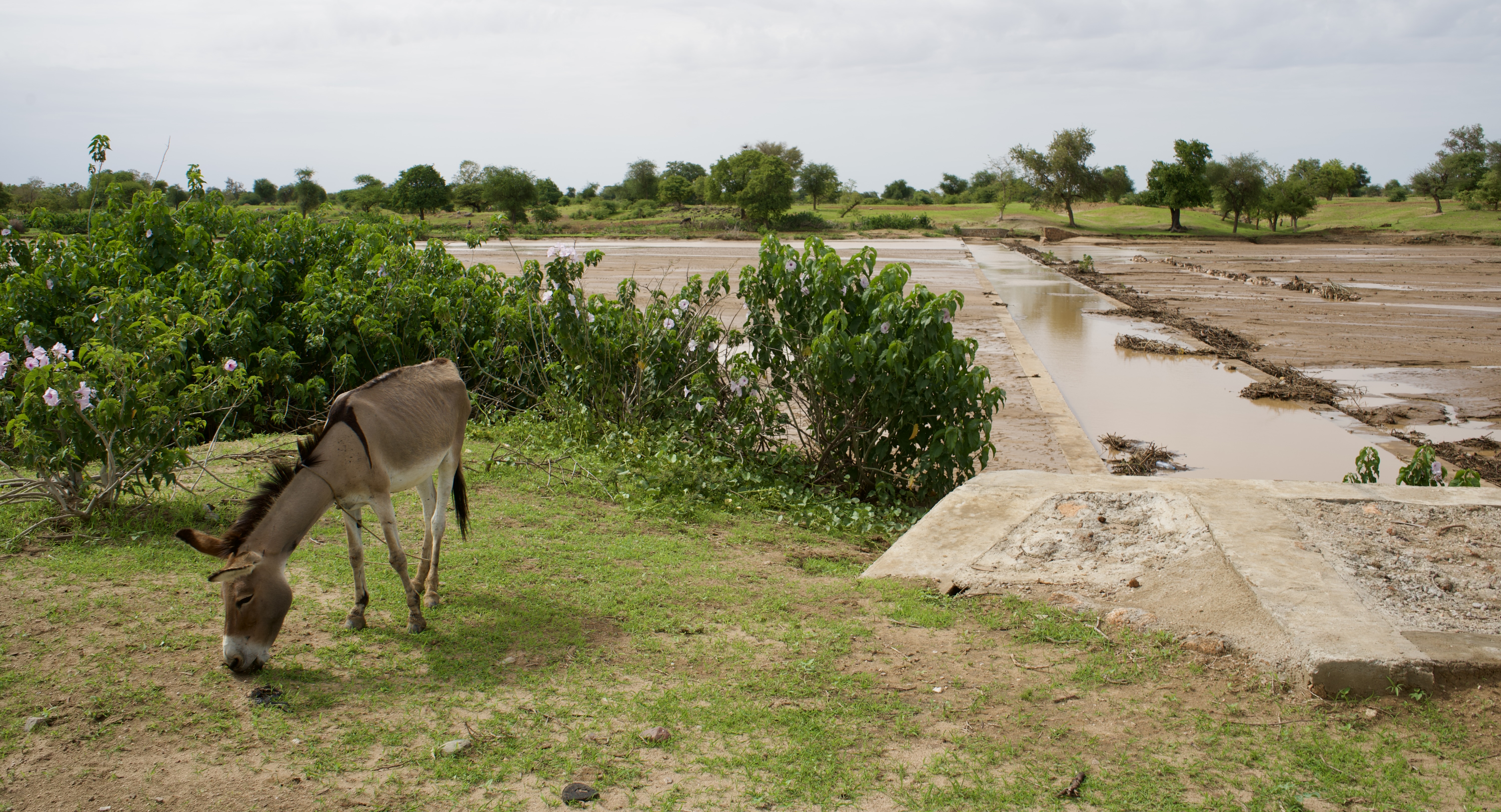
EU-funded seuils d’épandage are transforming the landscape in Eastern Chad by slowing and spreading floodwaters and creating conditions for increased agricultural productivity. Implemented by UNHCR in collaboration with local authorities, these hydraulic structures slow and distribute floodwaters across valley beds, enhancing groundwater recharge, preserving soils, and regenerating vegetation. This approach strengthens resilience to water scarcity, supports crop and livestock production, and improves food security while generating new income opportunities for communities.
The EU’s EUR 3 million contribution enabled the construction of three seuils in Ouaddaï in June 2024, directly supporting over 4,000 farmers – 72% of them women. Cultivated land expanded by 32%, leading to a 59% increase in cereal yields and a 64% rise in peanut production. Two more seuils are under construction near Aboutengué and will benefit 1,500 farming households. Beyond agriculture, this model supports social cohesion, as refugees and host communities work together to manage natural resources and engage in reforestation efforts.
Spotlight: Food Security & Women’s Empowerment in Wadi Fira
The Food and Agriculture Organization (FAO), with funding of USD 1 million from the Government of Japan, has launched a project in Wadi Fira, aimed at improving food and nutrition security while empowering women in communities heavily affected by the Sudanese crisis. The project will support 700 farming and herding households through community-based initiatives such as labor-intensive public works, agricultural input fairs, livestock support, and hydro-agricultural infrastructure rehabilitation. Implemented in collaboration with local authorities, the initiative aims to strengthen agricultural resilience and livelihoods, as well as promote social cohesion and women’s empowerment. Learn more.
Key Resources
Contacts
FAO: Gueladio Thiam, Coordinator of the Emergency and Resilience Pole ([email protected])
UNHCR: Yves Amoussougbo, Senior Development Officer ([email protected])