
Ouaddaï Province
Ouaddaï Province
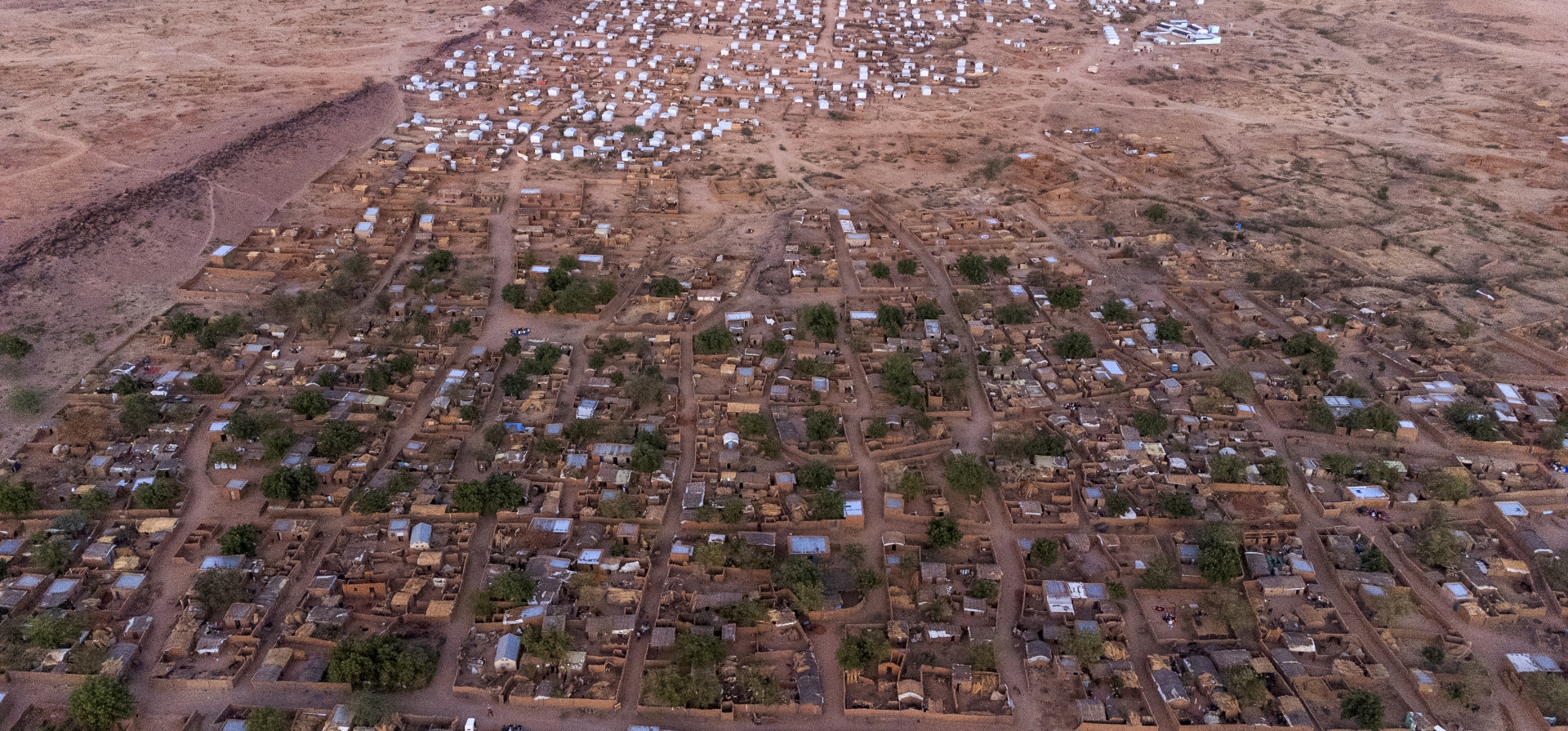
Farchana Settlement, Ouaddaï Province.
On this page
Located in Eastern Chad along the border with Sudan, Ouaddaï Province has long held strategic and historical significance as a center of trans-Saharan trade and today as a key administrative and economic hub. Its capital, Abéché, is Chad’s fourth-largest city and a gateway to Darfur and the eastern Sahel.
Ouaddaï is at the centre of one of Chad’s most complex humanitarian crises, with growing displacement pressures compounding long-standing development challenges. The province hosts a significant number of Sudanese refugees, including long-established communities in five formal refugee settlements (Farchana, Tréguine, Gaga, Bredjing, and Kouchaguine), in urban centres and villages, and tens of thousands of recent arrivals in border areas such as Adré.
The pressure on infrastructure, services, and natural resources is immense. Yet, Ouaddaï also has a clear, government-led vision for its future. The 2023–2027 Ouaddai Provincial Development Plan and the 2025 Annual Investment Plan outline priorities for economic revitalization, service delivery, resilience, and peacebuilding, offering a framework to better align emergency response with longer-term recovery and inclusion. To be effective, development investments in the province must be area-based, coordinated, and inclusive, ensuring that both host communities and displaced populations benefit from strengthened services and economic opportunities.
In Ouaddaï, UNHCR and UN-Habitat are working in collaboration with local authorities and the Ministry of Land Management, Housing, and Urban Development (MATHU) and the Ministry of Planning to develop Integrated Urban Projects for municipalities along the Abéché-Adré Corridor. To learn more, visit the page for the pilot site, Farchana.
Population Data
Data source: Ajala Platform. The Ajala Platform is a humanitarian coordination platform that collects comprehensive data for the response in Eastern Chad.
Map
Provincial Development Priorities
The 2023-2027 Provincial Development Plan (PDP) outlines four key priorities for sustained development in Ouaddai:
- Promote security and peace, including local governance and conflict prevention.
- Revitalize the local economy, with emphasis on agriculture, trade, and job creation.
- Expand access to basic services, particularly education, health, and water.
- Strengthen climate resilience and gender equity, particularly in rural areas.
The 2025 Annuel Investment Plan (PAI) builds on these goals by emphasizing conflict prevention and local governance capacity. It prioritizes the training of local committees, youth, women, and traditional leaders to strengthen peaceful coexistence. It also calls for capacity-building of provincial actors in planning, monitoring, and evaluation.
Sectors
Education
The PDP calls for the construction of 263 classrooms, the recruitment of qualified teachers, and the rollout of school feeding programs and safe learning environments. Refugee-hosting areas face acute shortages in classrooms, materials, and qualified staff. The 2025 PAI prioritizes revitalizing school feeding programs, improving parental engagement, and enhancing teacher training, especially in underserved and displacement-affected areas. Planned investments in secondary education and catch-up programs aim to support both host and displaced students. UNICEF and WFP are identified as key partners for implementation.
- Opportunity: Support the shift from temporary to sustainable learning spaces by investing in infrastructure, teacher recruitment (including salary support), and inclusive education materials targeting both refugees and host community children. Reinforce provincial plans through complementary education initiatives and partnerships with national and international actors.
Health
- Opportunity: Complement emergency health services with investments in primary care systems, referral networks, and infrastructure in refugee-hosting zones. Support government-led efforts to scale up medical equipment, transport, and decentralized health outreach.
WASH
According to the 2025 PAI, there are no functioning water towers across Ouaddai’s four departments. The plan calls for urgent investment in surface water management, including small-scale dams, boreholes, and retention structures to support both drinking water access and agricultural use. Improvements to sanitation systems are also prioritized in both rural villages and urban peripheries.
- Opportunity: Support sustainable water networks, latrine construction, and WASH infrastructure in refugee settlements and host communities, coordinated with local authorities. Complement provincial plans by targeting water-stressed displacement areas with durable and climate-adaptive WASH solutions.
Agriculture and Livelihoods
Over 80% of Ouaddai’s population depends on agriculture, yet food systems are increasingly fragile due to climate shocks and population pressures. Both refugees and host communities face limited land access, degraded soils, and a lack of inputs, tools, and credit, constraining productivity and resilience. Women, in particular, face multiple barriers, from lack of time and income to gender-based violence (GBV) and limited access to training. Nevertheless, they often lead small-scale microenterprises, informal savings groups, or income-generating initiatives such as petty trade, market gardening, and artisanal activities.
The 2025 PAI outlines support for 45,000 farmers through seed distribution, land preparation services, and capacity-building. Planned investments include the construction of 40 irrigation wells, 7 grain storage warehouses, and 20 agricultural transformation units. These actions aim to boost productivity and food security across Ouara, Assoungha, Djourf Al Ahmar, and Abougoudam departments.
- Opportunity: Strengthen rural livelihoods through climate-smart agriculture, land restoration, access to inputs, and community-based financial services. Expand support to women-led micro-businesses, cooperatives, and informal savings groups, access to markets, and tailored protection measures. Align humanitarian efforts with ongoing provincial investments to maximize impact.
Community and Social Services
The scale and trauma of the refugee influx from Sudan have heightened protection risks, including GBV, family separation, and psychological distress. The lack of shelter, privacy, and basic services in border areas like Adré and Tiné exacerbates these risks for both refugees and local populations.
The 2025 PAI highlights social cohesion and peaceful coexistence as key cross-cutting concerns. It emphasizes support for community mediation committees, inclusion of women and youth in peace structures, and improved coordination among humanitarian and local actors.
Only 0.3% of Ouaddai’s population is currently covered by social safety nets. This leaves vulnerable groups, including women, youth, elderly people, and people with disabilities, without adequate support to cope with shocks or access basic services. Expanding these safety nets is crucial for both protection and resilience.
- Opportunity: Integrate mental health and psychosocial support (MHPSS) into health systems; expand safe spaces for women and children; strengthen local peacebuilding structures; and scale up protection-sensitive social protection measures, including cash-based assistance and public works programs that target both host and displaced populations.
Priority Area-Based Investments
- Assoungha Department (Adré): High-volume displacement areas with severe gaps in services, and growing protection concerns. Over a third of new arrivals remain at the border, requiring urgent relocation and investment in host areas. The 2025 PAI identifies Assoungha as a priority for WASH infrastructure, agricultural support, and emergency health and education services.
- Ouara Department (Abéché): Urban growth and economic potential, with inclusion opportunities in public services and livelihoods. Provincial investments are planned for the Abéché regional hospital, secondary schools, vocational training, and small enterprise support. As a coordination hub, it is also critical for integrated service delivery.
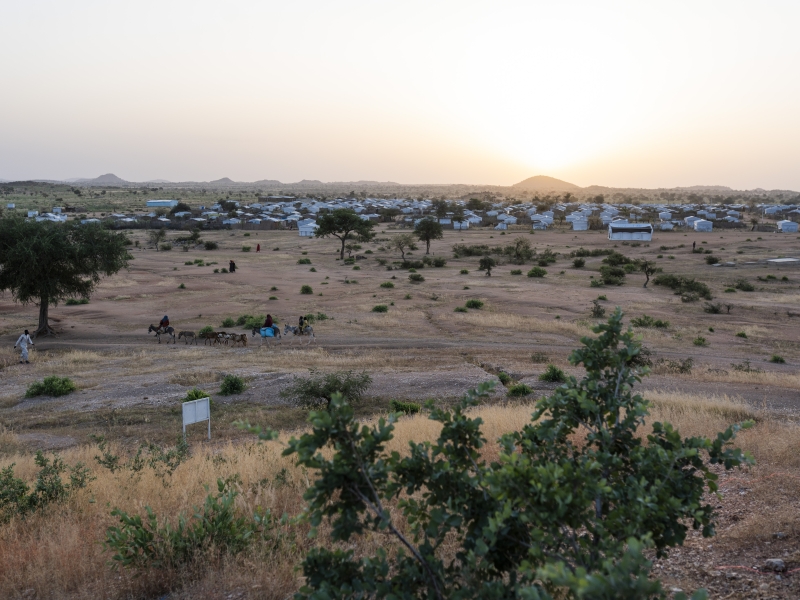
- Refugee settlements (Gaga, Bredjing, Farchana, Tréguine, Kouchaguine): These zones are targeted for reforestation, land use planning, and joint programming on livelihoods, WASH, and protection in refugee settlements and host communities. The province has called for greater involvement of development partners to strengthen long-term service delivery and reduce aid dependency.
Settlements
Ongoing Development Interventions
- World Bank, Territorial Development and Resilience Project for Chad (ResiTchad)
- World Bank, Chad Agribusiness and Rural Transformation Project (AGRIBUSINESS)
- World Bank, New Operation Chad Adaptive and Productive Safety Nets Project
- World Bank, Chad - Refugees and Host Communities Support Project (PARCA)
- World Bank, Chad Energy Access Scale Up Project (PAAET)
- AFD & European Union, Economic and Social Resilience Program for Populations in the East in the Face of Conflicts and Climate Change in Chad (RESPECCT)
- European Union, EU-INTPA Strengthening community resilience through improved livelihoods and access to basic services for vulnerable and displaced communities affected by conflict and climate-change
- European Union, EU-INTPA Regional Support to Chad, Ethiopia and South Sudan in Response to Sudan Crisis
- AfDB & UNDP, Emergency and Support Project for the Stabilisation and Recovery of Refugees and Host Communities in the Lake Chad Basin (PASRRC)
- BMZ & EU, Energy and socio-economic resilience for people in refugee situations and host communites in Chad (RECOS)
- Mastercard Foundation
- IsDB, Skills Training Education Program (STEP)
- BMZ, Sahel Resilience Partnership Initiative
- Qatar Fund for Development, Providing lifesaving protection and essential assistance to Sudanese refugees in Chad
Key Resources
Contacts
UNHCR: Francesca Coloni, Senior Development Officer ([email protected])
UN-Habitat: Camille Imbert, Territorial Planning, Aid & Development Specialist ([email protected])