Khartoum State
Khartoum State
On this page
About Khartoum
Khartoum, once a thriving capital and with a pre-war population of 6.3 million people, in April 2023 became the epicenter of heavy fighting in five out of the seven localities. An exodus of the population ensued. People found relative safety in Omdurman and Karrari localities in Khartoum State. Hundreds of thousands travelled northward to Egypt and Libya, while others went south towards Al Jazirah, Red Sea (Port Sudan) and Sennar, and continued further crossing into Ethiopia and South Sudan. The Government, as well as the United Nations and humanitarian actors, relocated to Port Sudan due to the conflict in Khartoum.
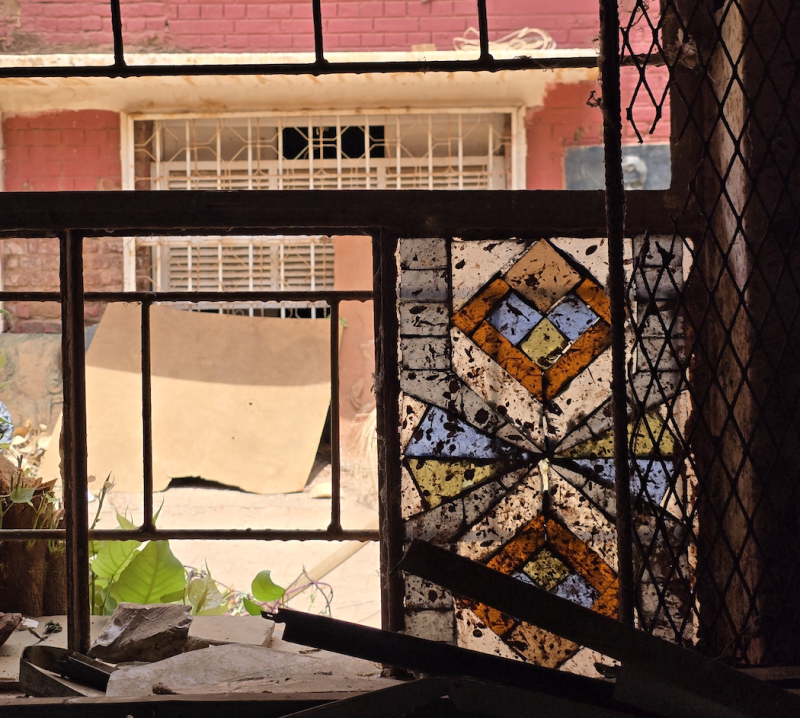
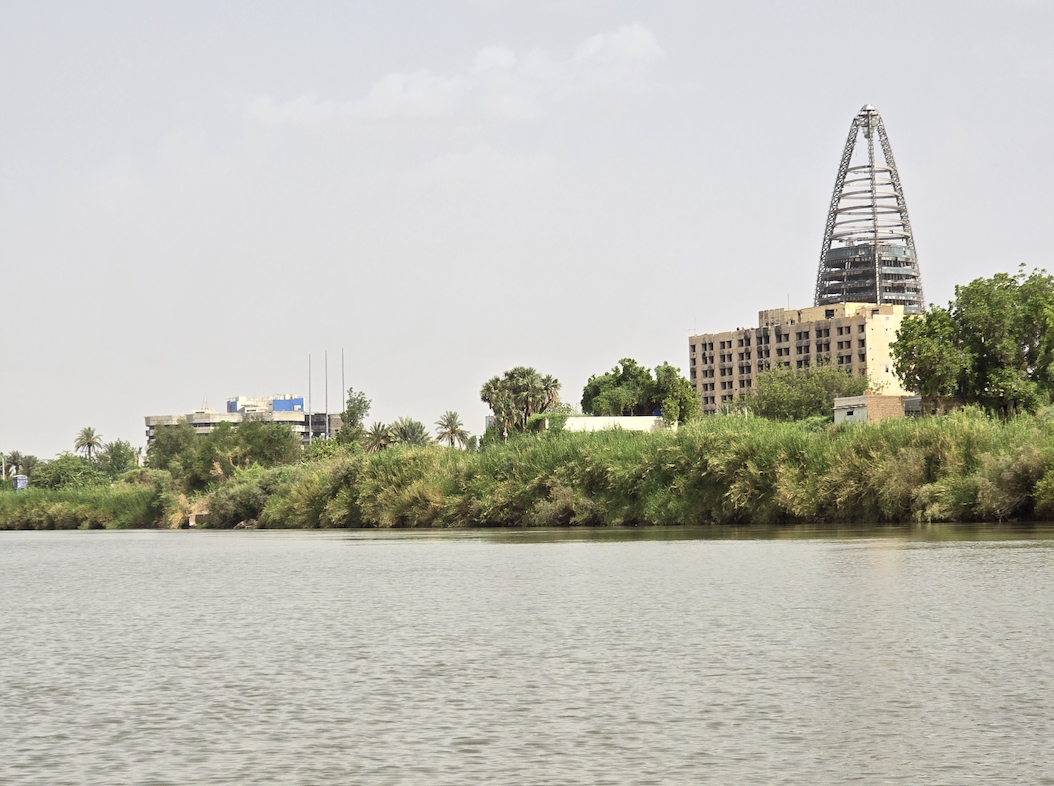
For two years, Khartoum experienced high levels of indiscriminate violence, characterized by urban warfare, shifting territorial control, heavy aerial bombardments, and civilian targeting. The large-scale destruction of civilian infrastructure was coupled with a massive loss in human capital. The economy was devastated, with industry and trade crippled, jobs destroyed, escalating poverty and widespread explosive ordnance contamination left across the city.
Since March 2025, Sudanese people are gradually returning to Khartoum, Al Jazirah, and Sennar, as well as other locations in the country. IOM estimates that 2.7 million IDPs have returned to Khartoum (August 2026), and UNHCR data analysis found that 59% of the 1.27 million Sudanese refugees who returned to Sudan intend to go to Khartoum and 45% have already returned to Khartoum (August 2026). For more information, see Returns to and within Sudan.
Laying the Foundations for Returns
The need to rebuild Khartoum is a shared concern among Sudanese and the international community. Khartoum remains highly fragile, with pervasive poverty, food insecurity, weak infrastructure and services, limited economic activity, and deep institutional deficits.
Most government institutions have returned to Khartoum. The Government of Sudan has established the Higher Committee for Voluntary Return and Reintegration (HCVRR) to provide national leadership and coordination for the voluntary return and reintegration of Sudanese nationals. The Committee is chaired by the Federal Minister of Human Resources and Social Welfare and brings stakeholders together, including federal ministries, state authorities, the Commissioner for Refugees (COR), Humanitarian Aid Commission (HAC), Civil Registry Authority, Customs Authority, private sector representatives, representatives of Sudanese return committees abroad, and international partners, including the International Organization for Migration (IOM) and the UN Refugee Agency (UNHCR).
Over the last year, UN agencies and NGOs have begun re-establishing offices in Khartoum and begun prioritizing humanitarian assistance in areas hosting internally displaced people and receiving large numbers of returnees.
Development actors are also working to collect data on the situation in Khartoum State, surveying service gaps, and determining what infrastructure is needed to rebuild the economy and ensure the population has access to essential services in the city. Development actors and the private sector will play a key role in supporting reconstruction and economic revitalization.
Spatial Analysis
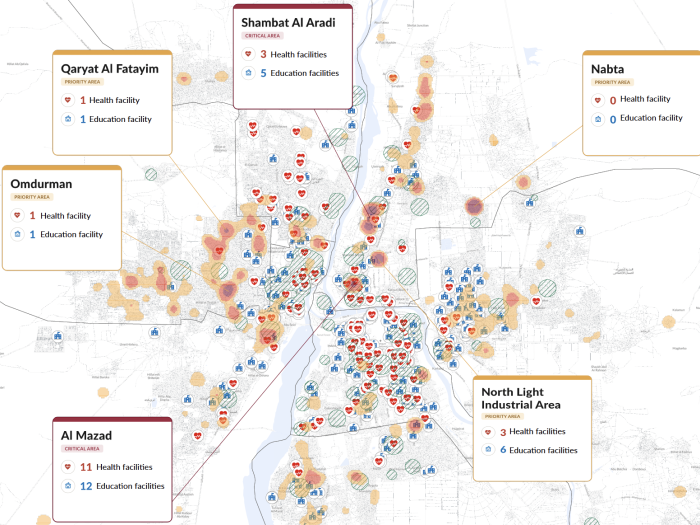
Khartoum Displacement and Damage Assessment.
Spatial Analysis
Spatial analysis can help prioritize financial and technical assistance in returns areas. The first iteration of spatial analysis for Khartoum State (September 2026) produced:
- The Khartoum Displacement and Damage Assessment 2026 overlays data on destruction and displacement and identifies priority reconstruction areas for health and education facilities.
- The IDPs and Returnees by Locality in Khartoum 2026 captures in population density across seven localities.
Moving forward, partners will be invited to share publicly available information and datasets to expand spatial analysis efforts in Khartoum State and inform the operational responses.
Priority Investment Areas
Ensuring the safety of the local population
Following intense urban conflict, explosive ordnance contamination remains one of the principal barriers to safe returns and recovery in Khartoum. While contamination is widespread, its full extent remains unknown. As recovery efforts advance, systematic surveys will play an important role in informing decisions on infrastructure rehabilitation, housing, public services, and livelihoods by identifying the extent of explosive hazards, areas suitable for safe use, and locations where further clearance may be required. This will help ensure that recovery investments are prioritized and implemented safely and effectively.
Development partners have an opportunity to fund this critical first phase of recovery by supporting explosive ordnance survey in priority return localities (e.g. Jebel Awlia, Um Bada and Sharg An Neel), together with Central Khartoum where government institutions and key public infrastructure are concentrated. Survey will establish the evidence base needed to prioritise recovery investments, define future clearance requirements and provide realistic estimates of the resources needed for full-scale clearance.
Alongside survey, funding is needed to support the marking and fencing of hazardous areas and emergency clearance of explosive hazards posing an immediate threat to civilians and recovery activities, including in homes, schools, health facilities, roads and other priority public infrastructure. Contaminated areas need to be identified, marked and prioritised for subsequent clearance as additional resources become available. Community-based Explosive Ordnance Risk Education (EORE) should be delivered alongside operational activities. Government authorities, community leaders and national mine action partners will need to disseminate locally tailored safety messaging and communication materials delivered through community centres, social media and the well-established neighbourhood social media groups already operating across Khartoum. The capacity of national mine action institutions will also need to expand to manage the scale of the explosive ordnance threat, with national mine action structures strengthened and better integrated into wider recovery and investment planning.
Increasing access to civil documentation
Documentation is critical to access basic services, exercise rights, and participate in economic life. Many returnees and IDPs in Khartoum lack identity documents, civil records, or proof of family status as a result of displacement, loss, theft, or the destruction of administrative systems. Without documentation, they face barriers to accessing education, health care, social protection, financial services, housing, land and property processes, and livelihood opportunities. Investing in civil documentation and its accessibility will therefore be essential to restore legal identity, facilitate access to services and financial inclusion, reduce protection risks, and support safe and sustainable reintegration.
Facilitating access to property, land and housing solutions
The scale of destruction, loss of documentation (e.g. title deeds), secondary occupation, and lack of access to property are major issues in Khartoum. The return of displaced populations presents an important opportunity to support peaceful reintegration and strengthen community resilience. As returnees seek to re-establish themselves in their areas of origin, proactive measures to address housing, land and property (HLP) issues will be critical to preventing tensions and promoting social cohesion. Availability and affordability of rental accommodation is also a key concern for lower-income households.
Given the current limitations in land administration and dispute resolution mechanisms, support for fair, accessible, and community-based approaches to resolving property claims can help mitigate the risk of disputes, protect returnees from exploitation, and facilitate the safe and sustainable recovery of homes and livelihoods. Early engagement on HLP issues can also contribute to preventing conflict, reducing the likelihood of eviction, and fostering confidence among returning populations and host communities alike.
Increasing access to basic services
Public data on the extent of damage to infrastructure and services is lacking, with assessments of critical infrastructure and service gap assessments needed. Priorities include health, education, and water and sanitation facilities, particularly in areas experiencing high levels of return and where existing services are overstretched. Restoring access to basic services will be essential to support safe and sustainable returns, reduce pressure at the community level, and rebuild public confidence in local institutions. To fast-track the ability of the population of Khartoum State to access services, partners will need to work together to assess needs by sector, share assessments and planned operational responses, and coordinate reconstruction efforts so that investments are sequenced, targeted, and mutually reinforcing.
Investing in Khartoum’s local leadership in social service delivery
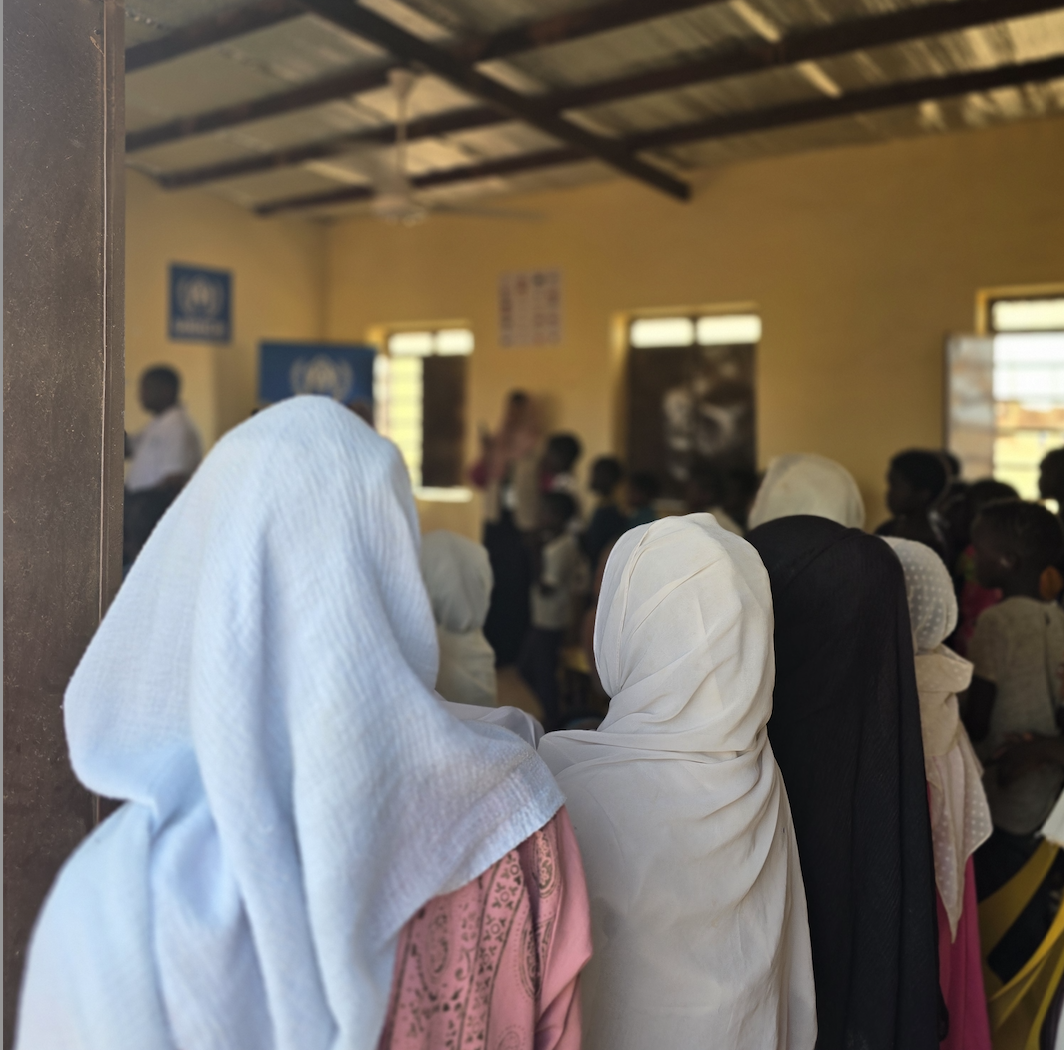
Khartoum’s recovery will require investments at community-level to rebuild trust among communities and foster inclusive, resilient, and peaceful neighborhoods where diverse groups can safely reconnect and participate in decision making together with local authorities. Social cohesion is one of the most powerful—but often underestimated—drivers of peace and prosperity. Interventions that support community centers will strengthen existing community-level infrastructure in areas experiencing significant returns and displacement. Given Khartoum’s scale, these centers also provide a vital entry point for reaching communities and tailoring support. An estimated 138 community centers were operational in Khartoum in 2023, of which 40 have been destroyed and 86 community centers require rehabilitation. These centers are area-based, not status-based, and therefore able to respond to the needs of women, youth, older persons, persons with disabilities, refugees and others in the community.
Promote peaceful co-existence among communities
Misinformation, disinformation, and hate speech are well-documented in Sudan, resulting in increasingly polarized communities. Digital platforms have been used by armed actors and others to shape public opinion, inflame ethnic tensions, and incite violence. There is a need to equip community-led groups to enable them to recognize, report and counter disinformation (verification networks) and organize events in the community to disseminate messages countering hate speech. There is also a need to work with journalists and social media influencers to counter misinformation about returnees and displaced populations with verified information.
Investing in employment interventions and supporting the private sector
Without deliberate efforts to reactivate Khartoum’s local economy, many returnees—particularly youth, women, and households that have lost assets—will struggle to secure income and rebuild their lives. Targeted livelihood support, including cash-based assistance, vocational skills development, enterprise grants, and cash-for-work schemes, can help returnees restore income-generating activities, rebuild assets, and reconnect with local markets.
Investing in the private sector will be central to Khartoum’s wider economic revitalization. Support to micro, small, and medium-sized enterprises can byexpand access to essential goods and services. Priority areas include solar energy solutions to address power shortages, small-scale agro-production and processing along the Nile, local food production such as bakeries and poultry, market rehabilitation, and construction-related services to meet growing demand for housing and infrastructure repair.
Spotlight on Development Projects
Key Resources
Contacts
For more information, Ravindran Velusamy, UNHCR Head of Field Office Khartoum ([email protected]).