
Localization

Localization
On this page
Introduction
When the Sudan conflict erupted in April 2023, Sudanese nationals were the first to respond to the urgent needs of their families and communities. To this day, they remain at the forefront of the emergency response. All efforts to advance the localization agenda in addressing the Sudan regional crisis ultimately pay tribute to Sudanese women and men, many of them highly skilled professionals, as well as the youth, who have leveraged every possible resource and avenue to serve the Sudanese population at large.
Women in particular have played a critical role in the process. Inside Sudan, women doctors established the Emergency Response Rooms (ERRs) on 16 April 2025 – as quickly as a day after the conflict broke out in Sudan – paving the way for ERRs to serve as first line responders in the country. “From the people, to the people”, the ERR movement seeks to support forcibly displaced and host communities across the country.
In parallel, Sudanese women have mobilized themselves across countries of asylum to ensure refugees, particularly women, are able to access registration of families. They have formed organizations and associations to facilitate delivery of critical and much-needed basic services. Women have spoken out on rights violations, abuse, and exploitation, including conflict-related sexual violence, and they continue to contribute to the ongoing peace processes.
These efforts by Sudanese to respond to the crisis have been further accelerated and enhanced by their neighbours in countries of asylum and return, who have strong links to Sudan. Many consider those who are fleeing as brothers and sisters, from one community, with shared values, including language, culture, and religion. These efforts, both inside Sudan and in neighbouring countries, have largely been sustained by the Sudanese diaspora, which provides financing and technical support by leveraging existing professional networks (for example, the Sudanese Doctors Syndicate).
The value addition of local actors to the response of the emergency is evident: they have leveraged their network, been incredibly quick and agile to deliver aid, and continually find ways to access the population even in the most conflict prone areas. Most of the response has been financed by the diaspora as part of a survival strategy – because significant financial support has not been forthcoming from donors - highlighting both the generosity of the Sudanese and the failure of the international system to finance and meaningfully support local actors.
The localization approach pursued in response to the Sudan regional crisis seeks to shift power to the people, thereby recognizing their leadership and agency on the ground. Investing in local actors, including Women-Led Organizations (WLOs), lays the foundations for sustainable responses because it invests in people who have demonstrated their commitment and accountability to their communities and displaced persons.
How can we advance the localization agenda?
Development and humanitarian actors can advance localization efforts by investing in:
- Significantly increasing the provision of earmarked funding to women-led organizations and other actors.
- Investing in systems strengthening of local organizations, which have already demonstrated their leadership, capacity and skills at a time of great adversity.
- Co-designing projects and budgets with WLOs, ensuring they have a voice in decision-making.
- Increasing the proportion of direct funding to WLOs, including informal groups, reducing reliance on intermediaries, and including reasonable overheads and indirect costs in budgets to support sustainability.
- Supporting local organizations in establishing robust accountability and anti-corruption mechanisms, while recognizing that risks exist across all actors and sectors.
- Reducing administrative barriers for WLOs by streamlining reporting and compliance requirements.
Is there an enabling policy environment supporting the localization approach?
- The policy environment supporting localization efforts differs from country to country. Countries with progressive policies, like Uganda and South Sudan among others, allow the establishment and financing of WLOs. In other countries of asylum, such as Egypt and Ethiopia, additional policy advocacy is required to facilitate the registration of WLOs. Similarly, in Sudan, additional advocacy is needed to enable WLOs to be registered and allowed to receive financing.
- Commitments made at the Grand Bargain and at the Global Refugee Forum in 2023 by host states and non-state actors seek to advance localization efforts in Uganda, Kenya, Rwanda, CAR, Chad, Egypt, and Ethiopia. These commitments center on the need to increase funding to local and national actors, promoting equitable partnerships and participation in decision-making and investing in capacity strengthening and leadership of local actors. Yet progress has been slow, with local actors reporting shrinking humanitarian space, aid cuts, and reduced technical support.
What challenges do local actors continue to face?
- Local actors are frequently perceived as service providers, as implementing agencies, with decision-making still dominated by international agencies. Yet those leading the localization approach are change makers and peace advocates, many of whom are closely linked with ongoing peace processes in Sudan.
- WLOs often lack visibility and access to donors, which lead to missed opportunities. For example, in Central African Republic, the government has allocated 10 hectares of arable land in Vakaga Province yet women working in the agriculture sector do not have sufficient access to tools and seeds required to work the land.
- Direct funding to local actors is far below target, and cuts in aid, technical support, and training have further weakened local NGOs.
- Local actors face compliance burdens, including without adequate resources to meet stringent reporting requirements.
What lessons have we learnt since the start of the Sudan conflict on advancing the localization agenda?
- Consistent advocacy is required at all levels to ensure that local actors, including WLOs, are at the table where decisions are being made. They are the voice of the voiceless majority yet are often sidelined at high-level meetings.
- Pledges of support to local actors frequently made at meetings, not always result in tangible financing, support and action on the ground. Tracking commitments of pledges made by the international community would help measure progress.
- Earmarked funding to WLOs and other community groups/networks and associations is critical to ensure a scale-up of activities. WLOs are not just focused on “women’s issues” like gender-based violence and child protection but a whole span of issues, including ensuring access to food and food security, health, and other basic services.
- Women’s centers in Sudan and neighboring countries of asylum have been incredibly important as safe spaces for women to share, network, and heal. The use of these women centers predates the start of the conflict in 2023.
- Localization efforts contribute to socio-economic integration of the refugees, as often WLOs and other local actors work in tandem with other refugee populations and host community groups. For example, in Kiryandongo settlement in Uganda, South Sudanese women refugees welcomed Sudanese women refugees at the outset of the conflict.
Who are the Women-led Organizations responding to the Sudan conflict?
To ensure that the Sudan humanitarian response is informed by the realities, priorities, and expertise of Sudanese and refugee women in Sudan themselves, the Humanitarian Country Team (HCT) co-established the Women’s Advisory Group (WAG) with the Sudanese women humanitarian leaders. In addition, the UN Resident Coordinator’s Office conducted a mapping of all WLO organizations. There are 110 WLOs operational across the country. This mapping is available upon request.
At regional level, there are several networks of partners.
Spotlight on the Regional Support Platform for WLO for the Sudan Regional Response
Spotlight on the Regional Support Platform for WLO for the Sudan Regional Response
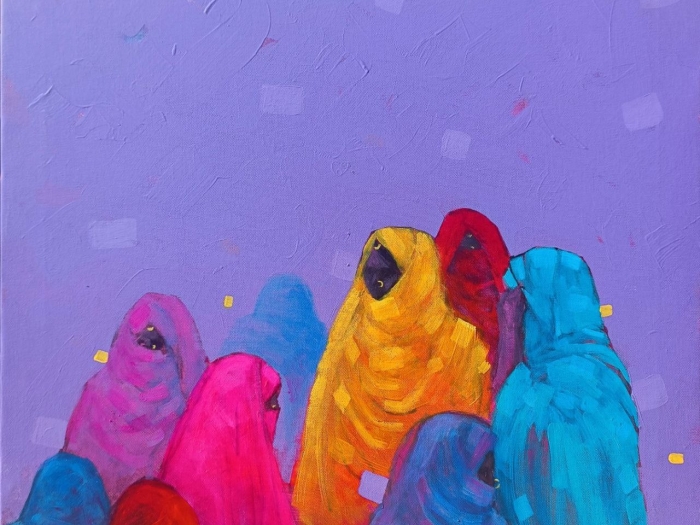
The Regional Platform, launched in March 2025, brings together Women-Led Organizations (WLO) responding to the Sudan regional crisis operating in Sudan and neighbouring countries of asylum and return. The platform represents women leaders in displacement and is strategically connected to the Women’s Advisory Group inside Sudan, enabling coordinated influence across the region. It is rooted in principles of equity, diversity, justice, and shared power. “We see each other as sisters in solidarity, who represent many other women-led organizations that are involved in delivering critical humanitarian actions and advocacy efforts,” explained one of its members, Amira Timan, at a platform meeting in November 2025.
Spotlight on the Emergency Response Rooms (ERRs)
Since conflict erupted in April 2023, Emergency Response Rooms (ERRs) have become a cornerstone of Sudanese-led humanitarian action. Rooted in the tradition of ‘nafeer’ (collective mutual aid), these volunteer-driven networks deliver life-saving assistance where access is limited. ERRs provide essential services such as food distribution, health facility support, water repairs, medicine delivery, safe evacuations, psychosocial first aid, and temporary learning spaces. Their decentralized structures spanning neighborhood, state, and national levels enable rapid, flexible responses while connecting to broader coordination platforms like the Localization Coordination Committee. ERRs exemplify the power of community-led solutions in crisis settings, highlighting the need to invest in local capacities and grassroots leadership for sustainable humanitarian action.
Spotlight on the Strategic Initiative for Women in the Horn of Africa (SIHA) Network
Founded in 1995, the Strategic Initiative for Women in the Horn of Africa (SIHA) is a regional women’s rights organization working across Sudan, South Sudan, Ethiopia, Somalia, Somaliland, Uganda, and beyond to advance gender equality and social justice in contexts of conflict and displacement. With over 220 member organizations, SIHA unites diverse women leaders into a strong feminist movement. Since the Sudan crisis began, SIHA has been a critical voice documenting rights violations, monitoring protection risks, and advocating for survivor-centered responses to conflict-related sexual violence. Beyond advocacy, SIHA strengthens grassroots women-led organizations through grants, capacity building, research, and cross-border collaboration. As part of the Regional Women-Led Organization Support Platform, SIHA brings deep regional expertise, evidence-based advocacy, and longstanding community partnerships, amplifying women’s leadership and influence in humanitarian response. As part of the Regional Support Platform for WLOs, SIHA brings deep regional expertise, evidence-based advocacy, and longstanding community partnerships, amplifying women’s leadership and influence in humanitarian response.
Spotlight on Mutawinat
Mutawinat is a Sudanese women-led organization committed to justice, peace, and human dignity. Despite escalating violence and shrinking humanitarian space, Mutawinat remains one of the few community-rooted structures operating across multiple states in Sudan. Its teams provide life-saving legal aid, documentation support, protection services, and awareness sessions for refugees, internally displaced persons, and host communities – all critical work as formal institutions collapse and millions are displaced. Women responders face heightened risks, including harassment, movement restrictions, and trauma, yet continue because their communities rely on them. Mutawinat calls for urgent support: flexible funding for women-led and displaced-led organizations, investment in legal aid and protection services, and renewed global attention to Sudan and the women leading its response.
Spotlight on Mental Health Voluntary Youth Organization (MHYVO)
When war erupted in Sudan in 2023, a group of 12 displaced young doctors refused to stand by. Together with other youth and women, they founded MHYVO, officially registering in 2024. Women-led, youth-led, and IDP-led, the organization brings a deeply personal understanding to the crisis, living within the communities they serve.
MHYVO provides counseling, mindfulness sessions, art therapy, safe spaces for women and girls, and mobile clinics reaching tens of thousands of IDPs, refugees, and host families. They also deliver non-food items and small livelihood opportunities, helping families rebuild safety and dignity. Despite stigma, scarce resources, and logistical challenges, MHYVO continues to innovate. Their call is clear: support to build capacity, strengthen resources, and expand mental health programming, ensuring healing for both minds and lives in Sudan.
Additional links:
- GRF Multi-stakeholder Pledge on Advancing Localization in Displacement and Statelessness Responses: Multi-stakeholder Pledge: Advancing Localisation in Displacement and Statelessness Responses | The Global Compact on Refugees | UNHCR
Contacts:
UNHCR: Katie Ogwang, [email protected]
UN Women: Beatrice Teya, [email protected]