Economic Inclusion
Economic Inclusion
On this page
As millions flee the conflict in Sudan, host countries are working with partners to empower refugees to rebuild livelihoods and contribute to local economies. Across Chad, Egypt, Ethiopia, Libya, South Sudan, Sudan, and Uganda, the ability of displaced people to access work and start businesses varies widely – reflecting a mix of legal frameworks, policies, and administrative practices that can either enable or restrict inclusion.
Promoting the economic and financial inclusion of refugees is both a humanitarian necessity and a development priority. Partnerships such as those with the Mastercard Foundation and the PROSPECTS initiative illustrate how coordinated action among governments, international organizations, NGOs, and the private sector can help unlock refugee potential and strengthen local economies.
“Economic Inclusion means enabling refugees to provide for themselves and be net contributors to economic development as consumers, workers and entrepreneurs. It is one of the most important keys to enhancing protection and unlocking solutions for refugees.” - Filippo Grandi, United Nations High Commissioner for Refugees
Policy Environment
The UNHCR 2025 Global Survey on Livelihoods & Economic Inclusion provides a comparative snapshot of policy environments across refugee-hosting countries.
Table 1. Access to formal employment, entrepreneurship and self-employment rights.
Country | Access to formal wage-earning employment | Right to exercise liberal professions | Register and operate a business | Self-employment |
Chad | Yes, with minimal or no challenges | Yes, with minimal or no challenges | Yes, with restriction | Yes, with restriction |
Egypt | Yes, with restriction | Yes, with restriction | Yes, with restriction | No |
Ethiopia | Yes, with restriction | Yes, with restriction | Yes, with restriction | Yes, with restriction |
Libya | No | No | No | No |
South Sudan | Yes, with restriction | Yes, with restriction | Yes, with restriction | Yes, with restriction |
Sudan | Yes, with restriction | Yes, with restriction | Yes, with restriction | Yes, with minimal or no challenges |
Uganda | Yes, with restriction | Yes, with restriction | Yes, with minimal or no challenges | Yes, with minimal or no challenges |
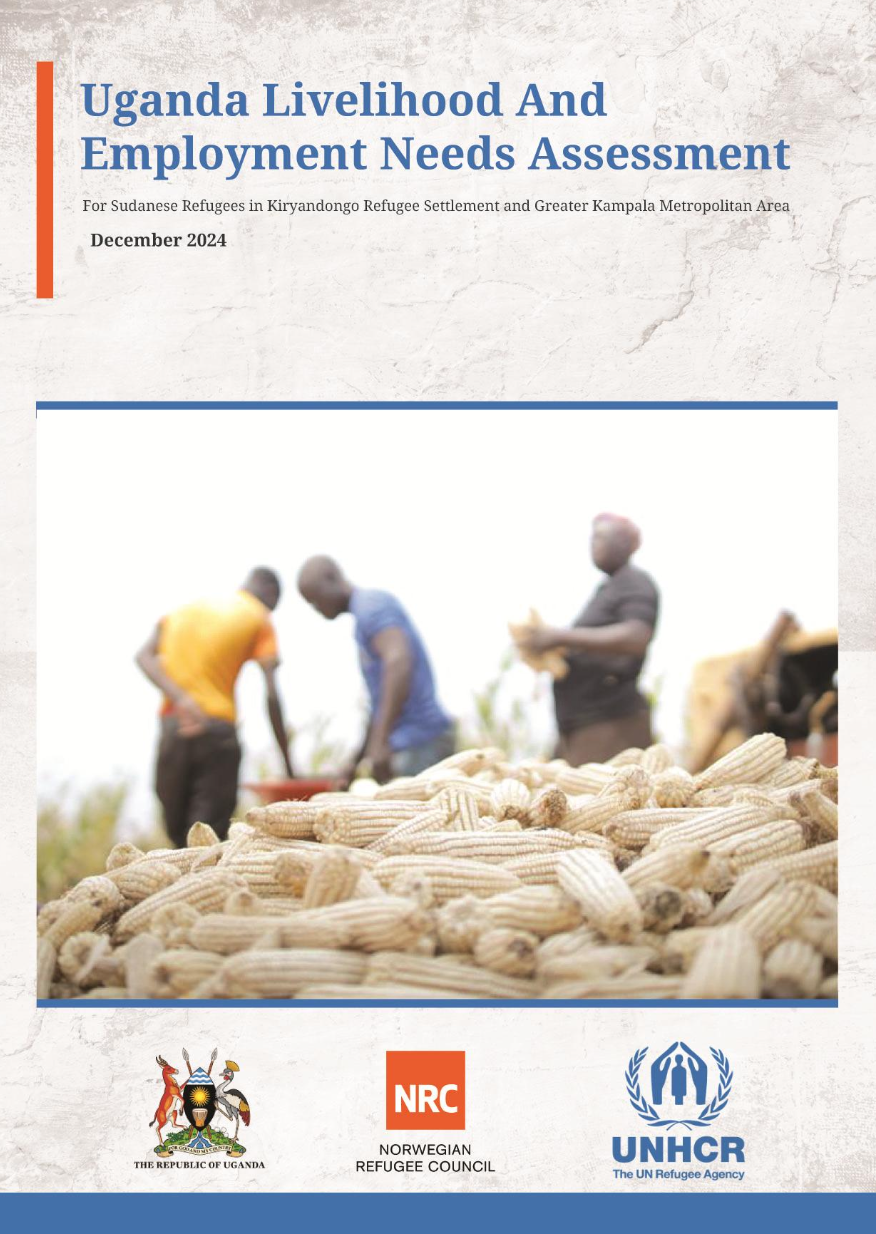
Key barriers faced by refugees in accessing formal employment include the need for a work permit, administrative and practical restrictions, high unemployment in host countries, a lack of knowledge about refugee rights by employers, language and skills match, and security issues. The survey highlights that women face additional social and mobility barriers, including household chores, lack of affordable care for children and family members, limited transportation options, and lack of information on employment opportunities.
Table 2. Diploma recognition, work permits, property and land rights.
Country | Recognition of foreign diplomas | Work permit required for access the labor market | Right to acquire property for business purposes | Right to use land for agriculture |
Chad | Yes, with minimal or no challenges | Yes | Yes, with minimal or no challenges | Yes, with restriction |
Egypt | Yes, with minimal or no challenges | No | No | No |
Ethiopia | Yes, with restriction | Yes | Don't know | Yes, with restriction |
Libya | Yes, with minimal or no challenges | Yes | No | No |
South Sudan | Yes, with restriction | Yes with limitations | Yes, with minimal or no challenges | Yes, with minimal or no challenges |
Sudan | Yes, with restriction | Yes with limitations | No | Yes, with minimal or no challenges |
Uganda | Yes, with restriction | Yes | Yes, with minimal or no challenges | Yes, with minimal or no challenges |
Table 3. Access to Financial Inclusion
Country | Use UNHCR or govt ID to open an account at a financial institution | Use UNHCR or govt ID to open an account at mobile money service |
Chad | Yes, with restriction | Yes, with minimal or no challenges |
Egypt | Yes, with restriction | Yes, with restriction |
Ethiopia | Yes, with restriction | Yes, with minimal or no challenges |
Libya | No | No |
South Sudan | Yes, with restriction | Yes, with restriction |
Sudan | Yes, with restriction | Yes, with restriction |
Uganda | Yes, with minimal or no challenges | Yes, with minimal or no challenges |
Countries & Settlements
Partners
Spotlight: PROSPECTS
Initiated by the Government of the Netherlands at the 2019 Global Refugee Forum, the PROSPECTS Partnership brings together UNHCR, ILO, UNICEF, IFC and the World Bank to create sustainable, long-term solutions to forced displacement in eight countries across the Middle East, North Africa, and the EHAGL region. Built on four main pillars – protection including social protection, education and learning, economic inclusion, and critical infrastructure – it has to date reached nearly 200,000 people with livelihood support through business training, financial services, and private sector engagement. A key achievement is a $20 million risk-sharing facility in Kenya, launched in October 2024 with IFC and Equity Bank. As the first of its kind, the initiative improves access to finance for small businesses in underserved refugee-hosting areas like Turkana and Garissa. IFC covers 50% of the risk, while PROSPECTS contributes $4 million, catalyzing greater investment in refugee economies.
Spotlight: Mastercard Foundation
In April 2025, Mastercard Foundation and UNHCR launched a landmark USD 300 million, five-year partnership to expand access to education and dignified work for more than 500,000 refugees and displaced youth across Africa. The initiative builds on the Foundation’s USD 25 million, three-year Sudan Response Partnership, launched in 2024 to support education, vocational training, and economic inclusion for displaced Sudanese, particularly women and girls. With nearly 5.8 million women and girls internally displaced in Sudan and many more living as refugees across the region, removing barriers to learning and livelihoods remains a central priority. Together, the partnerships are strengthening the policy and economic environments that enable long-term solutions for refugee inclusion in national education systems and labour markets across Africa.
Spotlight: EVAR Data Advances Economic Inclusion of Refugees in Egypt
In a landmark collaboration, UNHCR Egypt, WFP, and the Government of Egypt’s Central Agency for Public Mobilization and Statistics (CAPMAS) completed the 2025 Egypt Vulnerability Assessment for Refugees (EVAR), collecting data from over 3,300 refugee families across Greater Cairo, Alexandria, Aswan, and other regions. This joint assessment – the first since 2018 – offers a comprehensive and representative snapshot of refugee vulnerabilities, needs, and capacities, including labor market participation, food security, and access to services.
UNHCR is strategically leveraging EVAR data to generate comparable statistics on refugees and host communities. The dataset has been shared with the World Bank to inform two major analytical initiatives currently underway: (1) National Poverty Assessment, a comparative analysis of poverty among Egyptian nationals and refugee populations; (2) Human Capital Analysis, focused on labor market dynamics, with a gender-focused addendum. This collaboration marks a turning point in the inclusion of refugees in national-level poverty and employment reporting, shaping broader advocacy and policy dialogue on refugee inclusion in Egypt’s development agenda.
Key EVAR findings reveal that:
- 69% of refugees engage in income-generating activities, though mostly informal and precarious.
- 65% are classified as highly or extremely vulnerable.
- 58% are food insecure, with significant overlap between vulnerability and poor nutrition.
- 49% of households are female-headed, and 15% include members with disabilities.
Economic Inclusion Exchange East Africa
Economic Inclusion Exchange East Africa
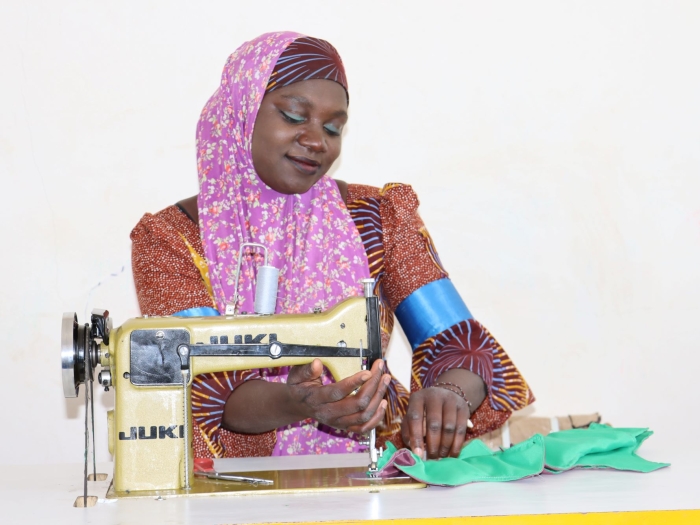
The Working Group is an exchange forum for members of regional INGOs, UN agencies, IFIs, CSOs, research institutes across the humanitarian-development nexus in Eastern Africa. It stimulates discussions, research, and sharing of best practices related to the livelihoods and economic inclusion of refugees, returnees, other persons in displacement and their host communities.
MADE51: Sudanese Artisans and Collection
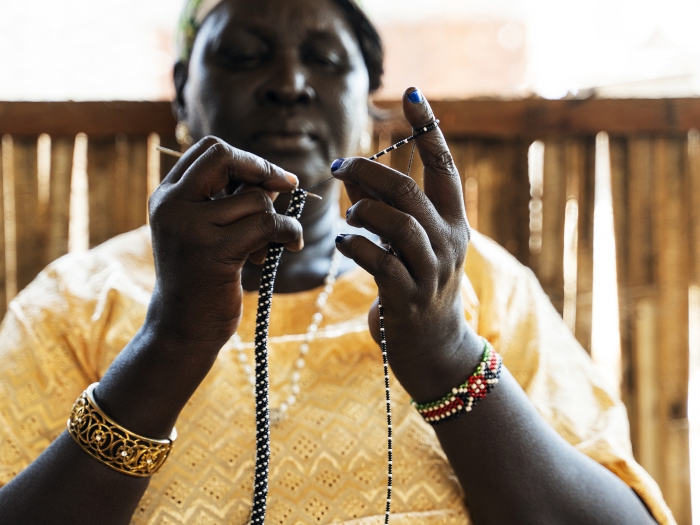
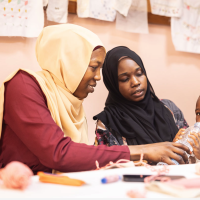
A Sudanese refugee woman in South Sudan specializing in beadwork. Partnering with another artisan, she is pictured working on an order for a large retailer that works in collaboration with MADE51.
MADE51: Sudanese Artisans and Collection
In countries hosting refugees, there are social enterprises designing, producing, marketing and exporting artisanal crafts. Combining the capabilities of local social enterprises with the skills of refugee artisans has the power to create an innovative and market-based model for economic inclusion. To build that opportunity, UNHCR has created MADE51, a global brand of artisanal home décor and accessories, crafted by refugees.
View a curated selection of products handcrafted by Sudanese refugee artisans
Document Library
Contacts
UNHCR:
- Anna Gaunt, Senior Livelihoods and Economic Inclusion Officer ([email protected])
- Theresa Beltramo, Senior Economist ([email protected])
- Jonathan Kampunzu, Livelihood & Economic Inclusion Officer ([email protected])