Climate
Climate
On this page
Climate and the Sudan Regional Response
Three in every four people displaced by conflict live in countries that are highly vulnerable to climate-related hazards – often without the means to prepare, adapt, or recover. Within the Sudan emergency, climate change is amplifying the drivers and consequences of displacement. In Sudan and neighbouring countries, many displaced people are settling in areas already hit by water scarcity, deforestation, extreme heat, and unreliable rainfall. Displaced people and host communities increasingly face overlapping crises: conflict, resource scarcity, and climate-induced shocks and stresses such as droughts, floods, and land degradation. This exacerbates existing vulnerabilities and undermines efforts to build self-reliance and resilience. Limited infrastructure and overstretched services further heighten climate risks, leaving communities with little capacity to withstand or recover from these cascading impacts.
Development and climate actors can play a critical role by investing in preparedness, adaptation, early recovery and resilience. Key priorities include:
- Support to host governments and local communities via investments in inclusive early warning systems
- Strengthen climate-resilient basic services (i.e. water and sanitation), climate-proof infrastructure, and climate-resilient shelter
- Scale clean energy access
- Restore and sustainably manage land and other natural resources
- Expand climate-resilient livelihoods and income opportunities for displaced and host communities
- Improve and ensure access to local early-warning systems and planning capacity
- Ensure displaced and communities are included in climate policies and plans
- Support community-driven and conflict-sensitive natural resource governance
- Align humanitarian assistance with climate finance and adaptation programmes
Maps: Compound Climate Hazards
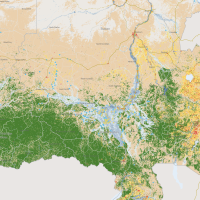
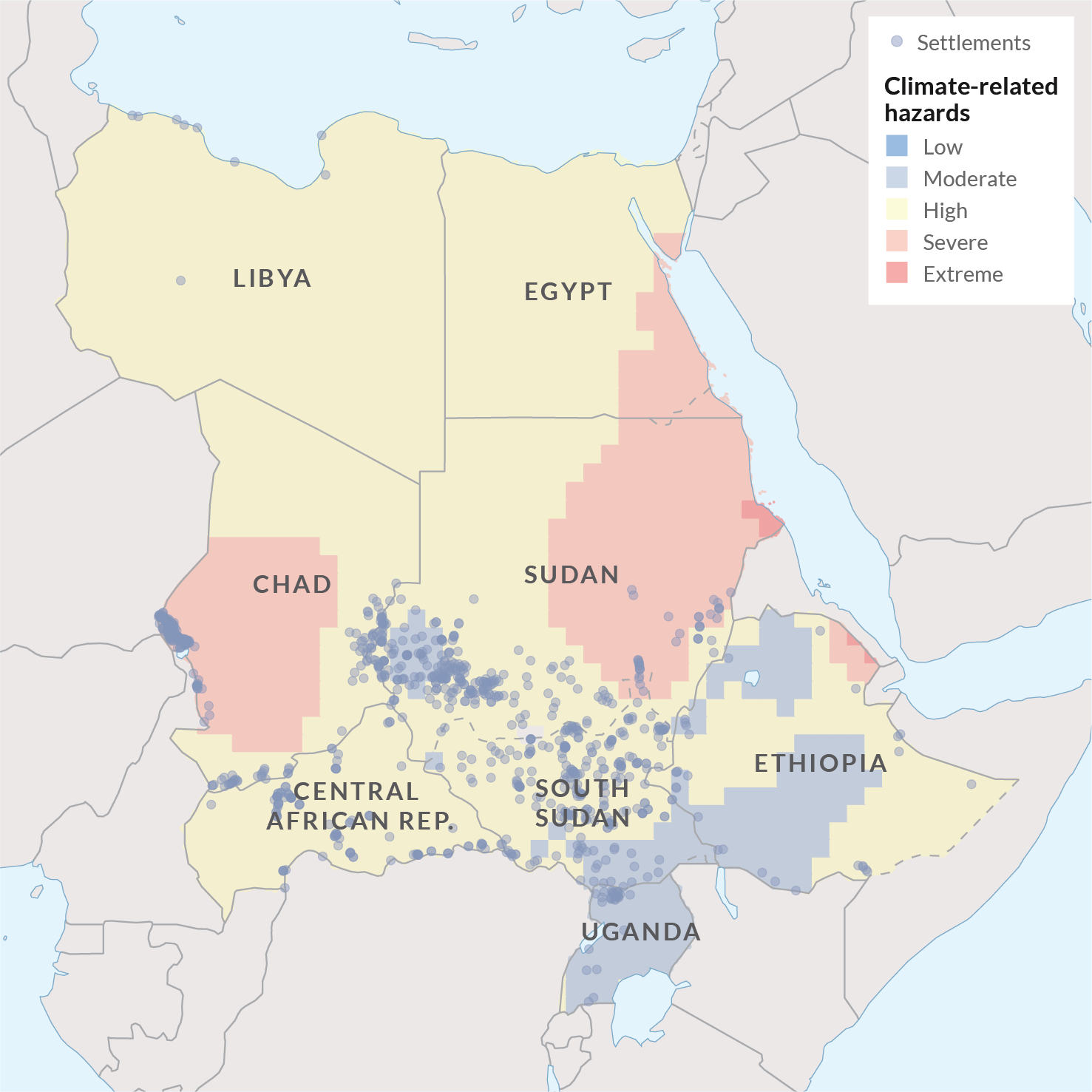
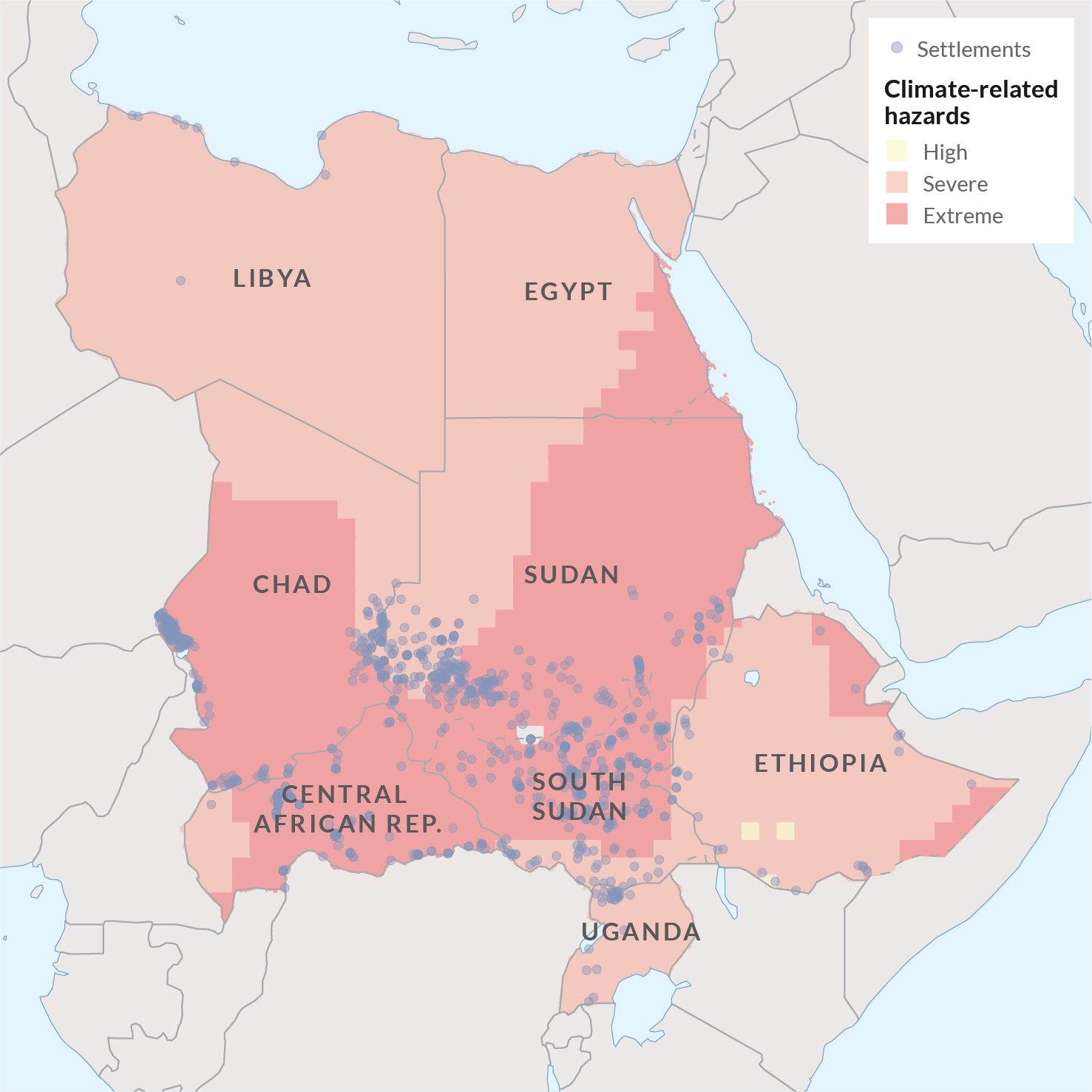
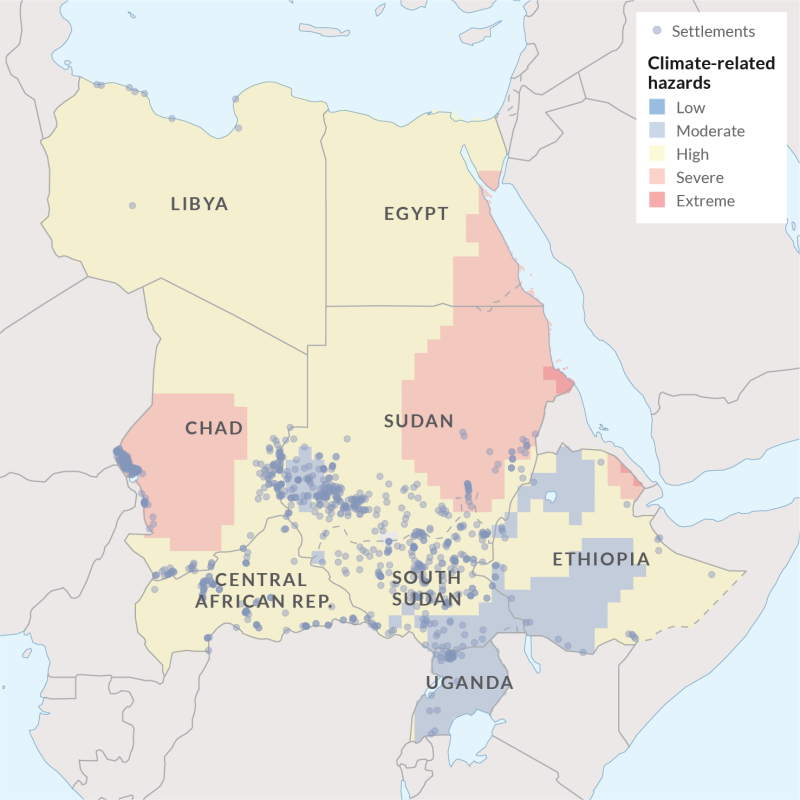
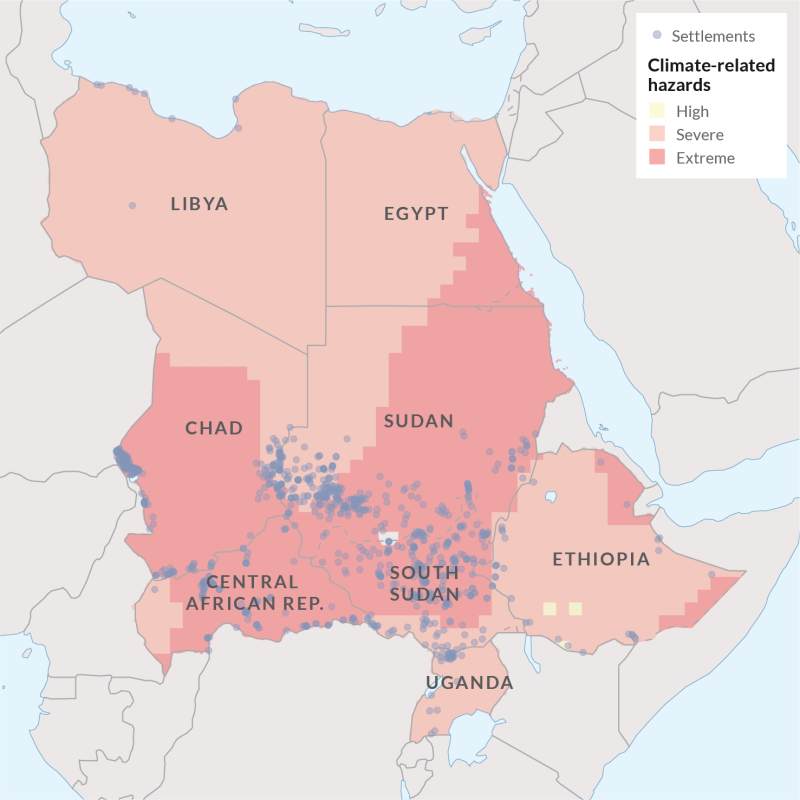
Displaced populations are particularly exposed and vulnerable to climate hazards. These two maps show the sites hosting people displaced in countries impacted by the Sudan conflict and the overlay of multiple climate-related hazards, under baseline conditions (left map) and by 2040 (right map). At baseline, the mapping shows that settlements hosting displaced people are located in areas of moderate, high, or severe climate risk. There is a drastic increase in climate hazards across the region: by 2040, these settlements are projected to face severe or extreme climate-related risks, based on the composite indicator combining heat stress, drought stress, and flood risk. This means that hazard levels are at least doubling in intensity and increasing ten‑fold in frequency compared to moderate conditions. Extreme hazard levels are associated with exceptional and widespread crop and pasture losses; severe shortages of water in reservoirs, streams, and wells leading to water emergencies; widespread flash and riverine flooding with potentially catastrophic soil erosion; and prolonged exposure to extreme heat, including more than 54 days exceeding the potentially lethal heat index threshold of 41 °C.
Maps produced by UNHCR. Climate hazard data source: Alliance of Bioversity-CIAT, as part of the CGIAR FOCUS Climate Security. Site location data source: UNHCR GIS database. The ‘baseline’ maps show the compounding impact of multiple climate hazards under baseline conditions (average 1981-2010). The ‘future’ maps forecast climate change impacts by 2040. The composite index for “climate-related hazards” is a tailored index to assess climate-related impacts on displaced people worldwide, revealing their current and future exposure to compounding effects of heat, flood and drought hazards when co-occurring. For more information on the methodology, see here.
Sudan
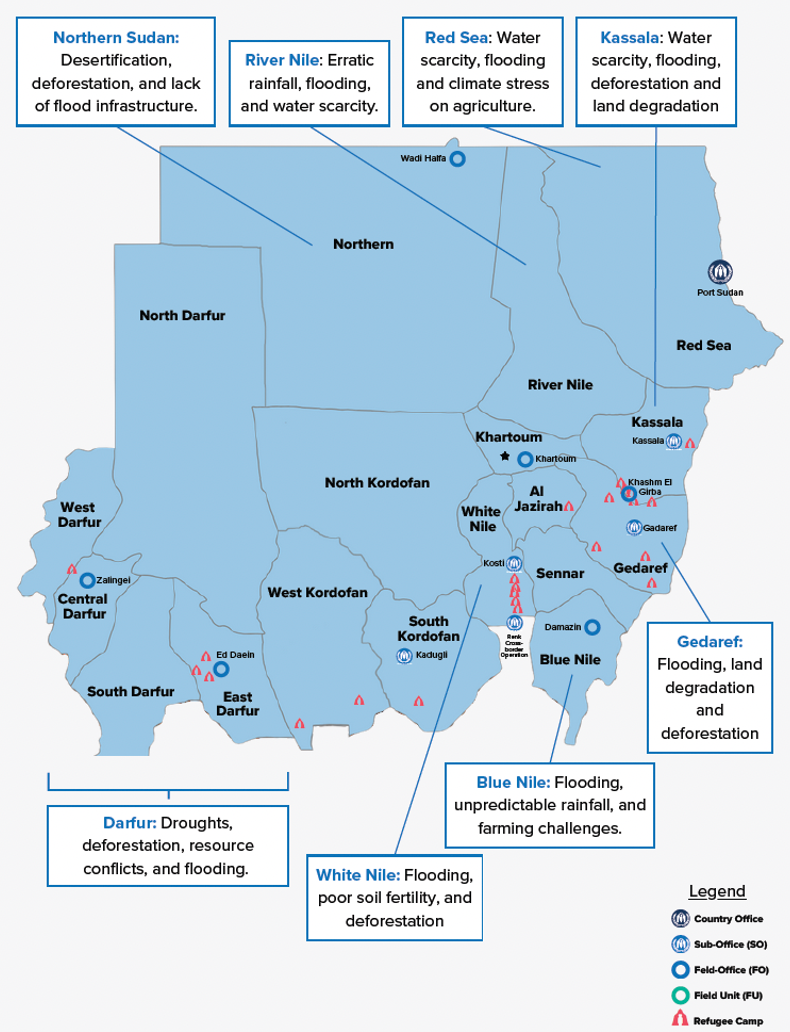
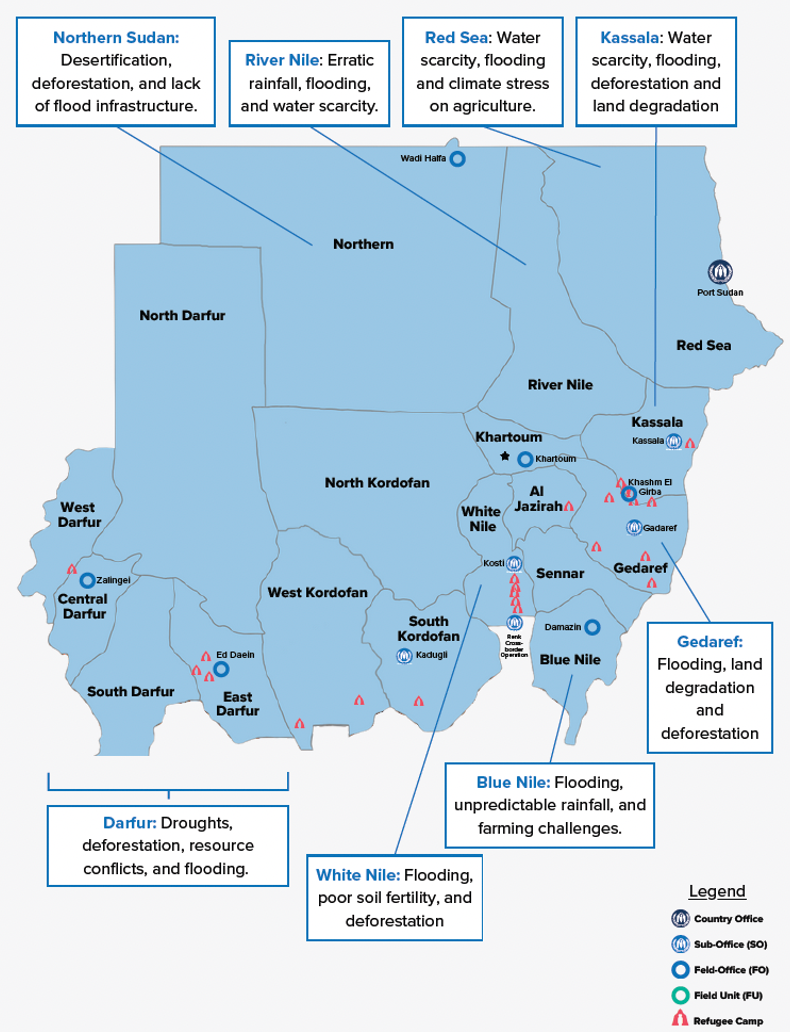
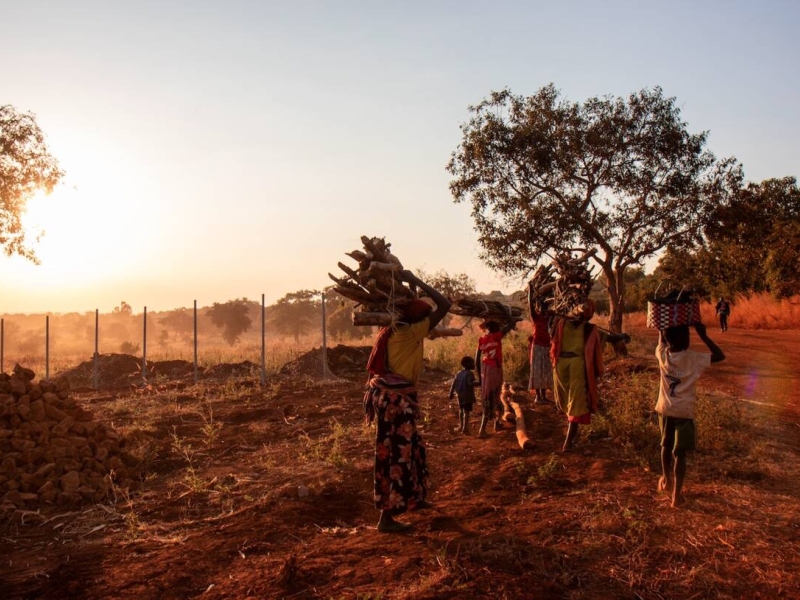
The climate crisis is intensifying the already dire situation for people in Sudan. Sudan ranks 184th on the ND-GAIN Index for climate vulnerability, highlighting its high exposure to climate risks and low readiness. Over the past decade in Sudan, weather-related disasters have triggered an average of 150,000 internal displacements annually (IDMC). In 2024 and 2025, devastating floods struck communities already uprooted from their homes, destroying fragile shelters and exposing families to deadly waterborne diseases. Concurrently, prolonged droughts have dried up essential water sources, forcing displaced people to rely on unsafe alternatives. Deforestation is accelerating, as people search for firewood around overcrowded settlements. Climate change in Sudan is not a standalone crisis; it is a multiplier that deepens existing vulnerabilities, undermines pastoral and agricultural livelihoods, and exacerbates food insecurity.
Countries of Asylum
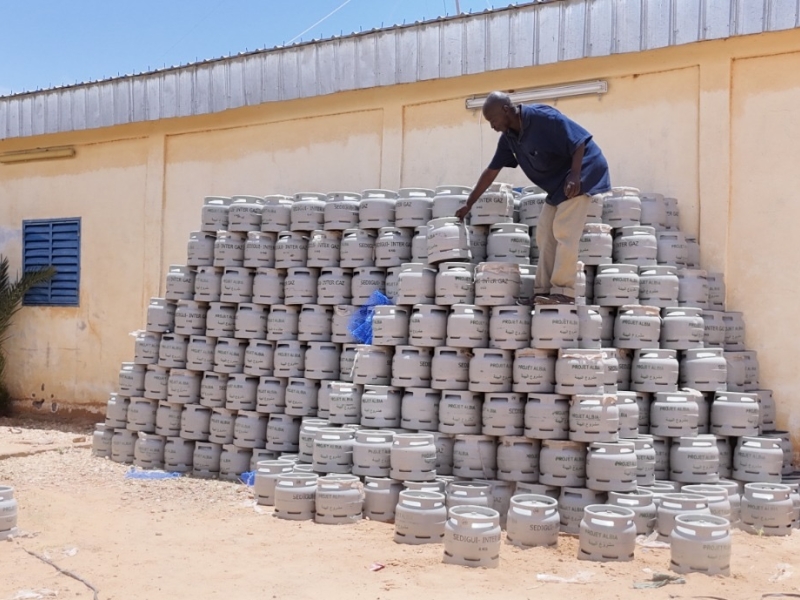
The new arrival of over 918,000 refugees in Eastern Chad has placed significant pressure on fragile ecosystems and overstretched local services. Following the 2023 Decree granting refugees land access, the Government allocated 17,500 hectares for land rehabilitation programmes benefiting refugees and host communities. In support of the Chadian Government, UN agencies (FAO, IOM, UNHCR, WFP) and partners are joining forces rehabilitate 100,000 hectares, with the goal to support 1 million participants to achieve self-reliance by 2029 (see Agriculture & Food Security in Chad). Moreover, EU-funded seuils d’épandage are transforming the landscape in Eastern Chad by slowing and spreading floodwaters and creating conditions for increased agricultural productivity (see WASH in Chad). Other development interventions are also focusing on expanding access to electricity, clean cooking solutions, and solar energy (see Energy & Environment in Chad).
The Government of Ethiopia has committed to creating climate-resilient and sustainable settlements hosting refugees and host communities, in line with its pledges at the 2023 Global Refugee Forum on human settlements and climate action. Ura Settlement in Benishangul-Gumuz Region hosts over 11,000 relocated Sudanese refugees (UNHCR June 2025) and faces various climate-related and environmental challenges, including deforestation, soil erosion, water resource management, and waste management. Investment priorities include diversified and renewable energy solutions and linkage with national water and waste management systems.
National Adaptation Plans
National Adaptation Plans (NAPs) outline how countries will adapt to climate change in the medium- and long-term (UNDP, What are NAPs and why do they matter?). NAPs identify key climate risks and priorities for the reduction of vulnerabilities to protect people, livelihoods, infrastructure, economic activity and natural ecosystems - by mobilizing climate finance, international support, and coordination. Globally, few NAPs explicitly include refugees and displaced populations, despite their high vulnerability to climate shocks (UNHCR November 2025 and Refugees International 2023). Within the region impacted by the Sudan conflict, five countries have developed NAPs: the Central African Republic, Chad, Ethiopia, South Sudan, and Sudan, while consultations in Uganda are ongoing. Of these, Chad, South Sudan and Sudan identify refugees within their NAPs – and Chad and South Sudan also include concrete policy provisions (UNHCR November 2025). Globally, only four of the thirty largest refugee-hosting countries include concrete refugee provisions in their NAPs, highlighting the comparatively advanced inclusion efforts in countries responding to the Sudan crisis.
National Disaster Risk Reduction (DRR) Strategies and Regional Instruments
Disaster displacement and human mobility are increasingly acknowledged in national and regional Disaster Risk Reduction (DRR) strategies. Nevertheless, risk assessments and data collection on human mobility are not strongly reflected (Platform of Disaster Displacement, UNDRR, UNHCR, 2024). In the region impacted by the Sudan conflict, Egypt, Ethiopia, South Sudan, Sudan and Uganda have developed national DRR strategies or related documents. Uganda's national DRR strategy identifies the risk of displacement due to conflict, violence or civil unrest and identifies the ministries responsible for refugees in disaster contexts. Sudan’s National REDD+ Strategy and Action Plan notes the increasing competition for natural resources and farmland in areas inhabited by refugees and IDPs.
Country or Region | Publication Year | Strategy | Timeframe | References Displacement |
Egypt | 2017 | National Strategy for Disaster Risk Reduction 2030, Summary for Dissemination | 2017-2030 |
|
Ethiopia | 2013 | 2013-2023 | Y | |
South Sudan | 2018 | Ministry of Humanitarian Affairs and Disaster Management Strategic Plan | 2018-2020 | Y |
Sudan | 2021 | 2022-2032 | Y | |
Uganda | 2022 | Five-Year Disaster Risk Reduction Strategic Development Plan | 2017-2022 | Y |
IGAD (Inter-Governmental Authority on Development) | 2021 | 2019-2030 | Y | |
League of Arab States | 2018 | 2018-2030 | Y |
*Note: Categorized as “other instruments”, such as laws and strategy-like documents focused on a single sector or hazard.
The Economic Community of Central African States (ECCAS) released a ECCAS Official Statement in 2024 detailing progress made and next steps to accelerate implementation of the Sendai Framework for Disaster Risk Reduction 2015–2030 in the ECCAS region.
Climate Finance
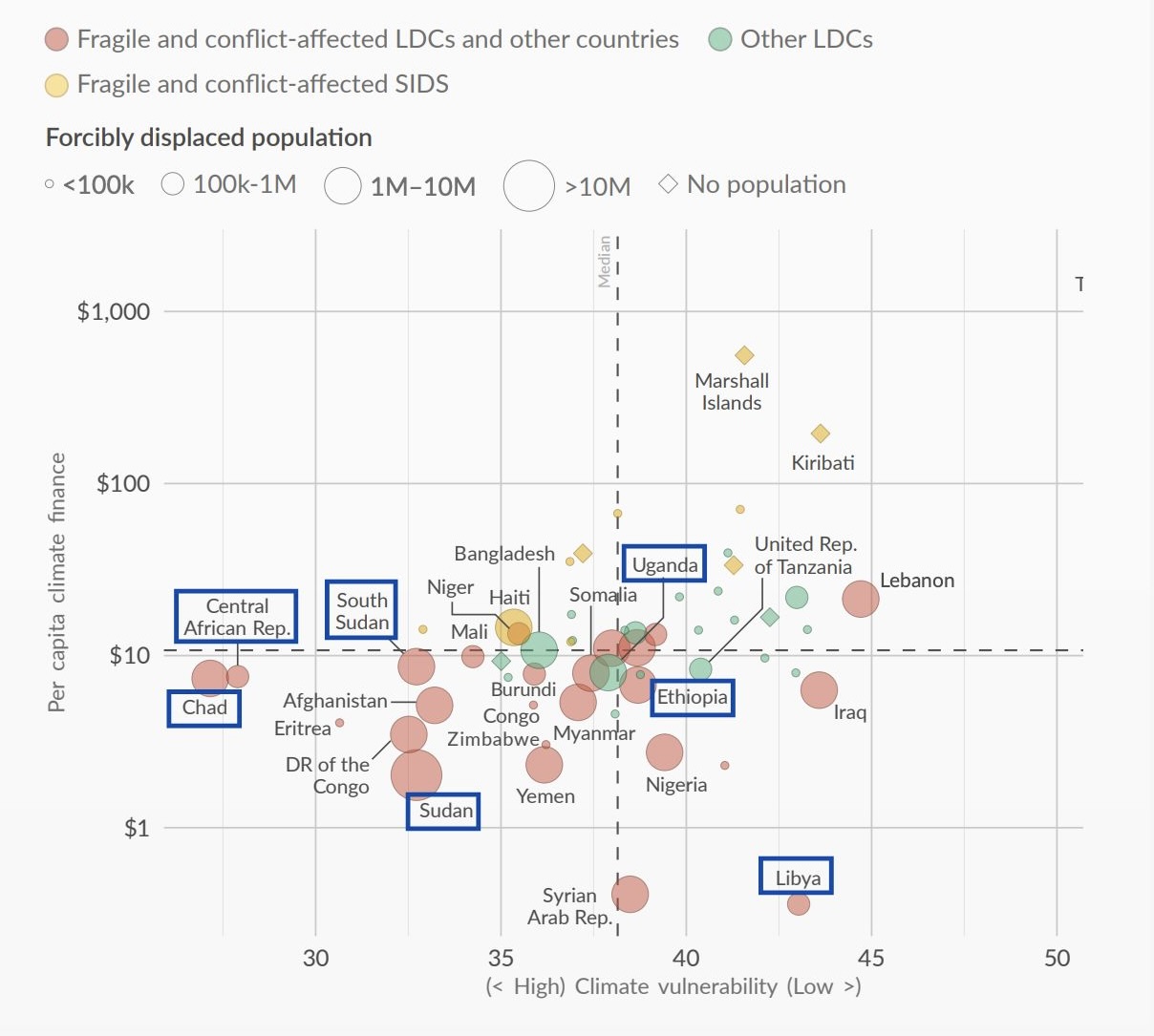
Countries and local communities responding to the Sudan conflict are often themselves fragile, conflict-affected, and highly vulnerable to climate change. However, highly climate vulnerable fragile and conflict-affected countries tend to receive the least average yearly finance per capita (2010-2022). All countries impacted by the Sudan conflict - except Egypt - received less than USD 10 per capita per year in climate finance over that period. Libya (USD 0.36 per capita) and Sudan (around USD 2 per capita) received particularly low levels of climate finance support (ODI Global 2025). The Multi-Stakeholder Pledge on Climate Action, adopted by South Sudan, Uganda and Ethiopia at the Global Refugee Forum in 2023 and co-led by the Government of Ethiopia, calls for the inclusion of forcibly displaced and stateless people and host communities within the scope of new and existing climate action financing decisions, windows, mechanisms, strategies – as well as national policies and planning such as NAPs and DRR strategies.
In this context, climate finance presents a critical avenue to scale up support for countries responding to the Sudan situation and ensure equitable access to climate finance for host communities and those displaced by conflict in Sudan. Ongoing climate finance interventions include a project focused on disaster management and flood mitigation in South Sudan, financed by the Green Climate Fund (GCF) and approved in October 2025. The project will build climate resilience in flood- and drought-prone areas of Northwestern South Sudan by strengthening institutional capacities, improving climate services, and supporting community-led adaptation and livelihoods. As South Sudan’s first single-country project supported by GCF, its integrated approach is expected to benefit refugees, IDPs, returnees and host communities by building community-shared assets and easing tensions among communities. Secondly, the Green Climate Fund also approved an accelerated programme of action in support of the Government of Chad's climate priorities.
Image. Highly climate vulnerable least developed countries (LDCs) and fragile or conflict-affected countries, that are often host or home to large forcibly displaced populations, tend to receive the least average yearly finance per capita (2010-2022). Countries impacted by the Sudan conflict are highlighted.
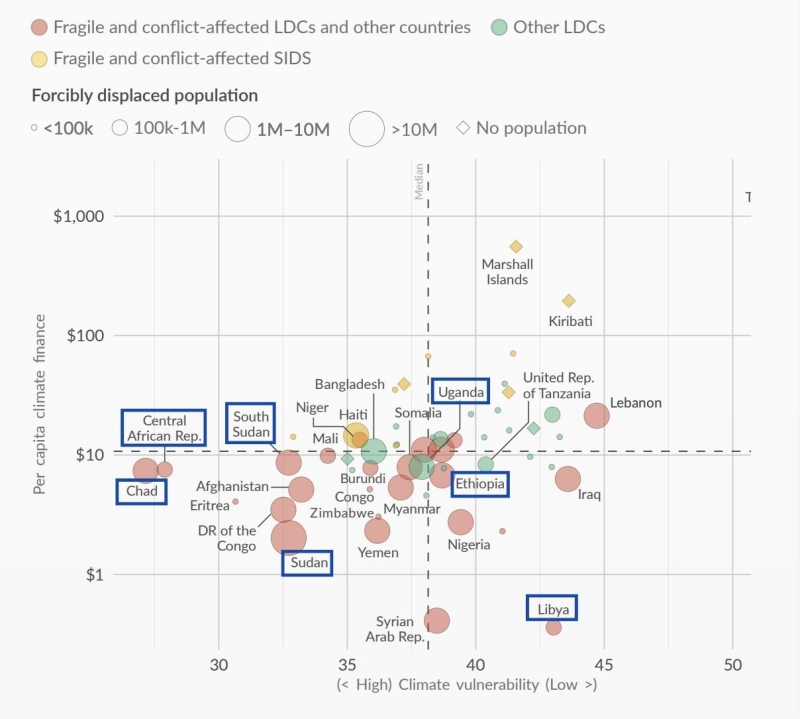
Sources: UNHCR visualisation based on ODI Global analysis, using World Bank Group FCS list; UN LDCs list & SIDS list FY2024, Climate finance data from OECD Creditor Reporting System (2010-2022), ND-GAIN country index from 2024; UNHCR data on forcibly displaced populations as of mid-2025. In the absence of an ND-Gain country score for South Sudan, a proxy score is added based on Sudan’s score. More info here: ODI Global, (2025), Small change? Our projections for the conflict blind spot in climate finance by 2030.
Document Library
Contacts
UNHCR: David Githiri Njoroge, Senior Operations Officer ([email protected])